

What's Happening?
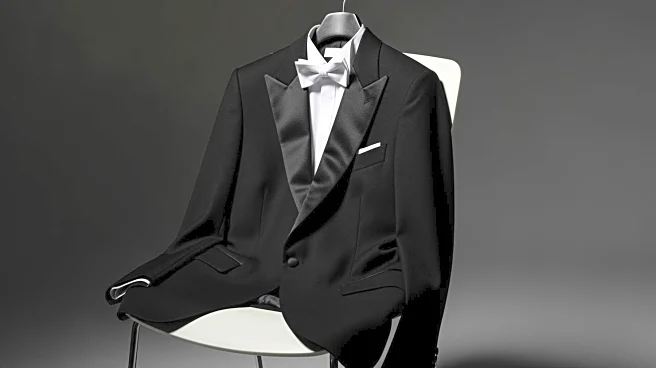
Michael Rider, the artistic director of Celine, presented his third show for the brand, focusing on classic fashion elements with a modern twist. The Fall 2026 collection featured familiar, often sober designs that were disrupted with unique details,
such as tailored jackets with flared silhouettes and unusually small gold buttons. Rider emphasized slimmer silhouettes, which he described as feeling fresh, and incorporated flared flood pants in various fabrics. The show took place in a wooden box venue behind the Institut de France, with music from artists like Prince enhancing the 1970s vibe of the collection. Rider aimed to evoke a collaborative jam session atmosphere, reflecting the creative process in the Celine studio.
Why It's Important?
The Celine Fall 2026 collection highlights the ongoing trend in the fashion industry towards blending classic styles with innovative details. Rider's approach to fashion, which includes collaboration and experimentation, reflects broader industry movements towards inclusivity and creativity. This collection may influence other designers to explore similar themes, potentially impacting fashion trends and consumer preferences. The emphasis on slimmer silhouettes and unique fabric choices could drive demand for these styles, affecting retail strategies and production decisions in the fashion sector.
What's Next?
As the fashion industry continues to evolve, designers like Michael Rider may further explore the balance between classic and modern elements in their collections. The reception of Celine's Fall 2026 collection could influence future designs and collaborations within the brand and beyond. Fashion critics and consumers will likely analyze the collection's impact on upcoming trends, potentially leading to shifts in market demand and production strategies. Rider's focus on collaboration and creativity may inspire other designers to adopt similar approaches, fostering innovation across the industry.
Beyond the Headlines
The Celine Fall 2026 collection raises questions about the role of tradition versus innovation in fashion design. Rider's emphasis on collaboration and the 'messier inner lives' of individuals under beautiful clothes suggests a deeper exploration of identity and self-expression through fashion. This approach may encourage consumers to view fashion as a form of personal storytelling, influencing purchasing decisions and brand loyalty. Additionally, the collection's unique details and styling choices could spark discussions about the cultural significance of fashion as a reflection of societal values and trends.