





What's Happening?
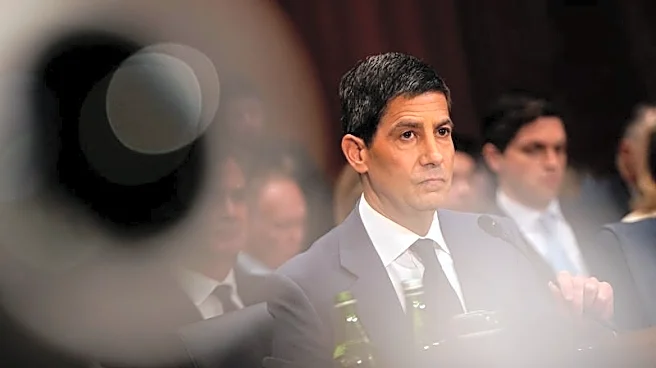
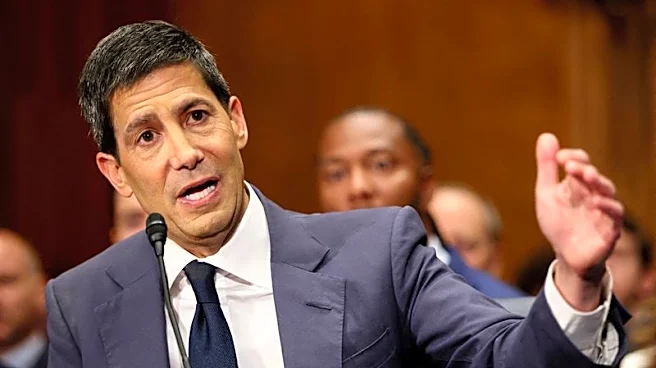
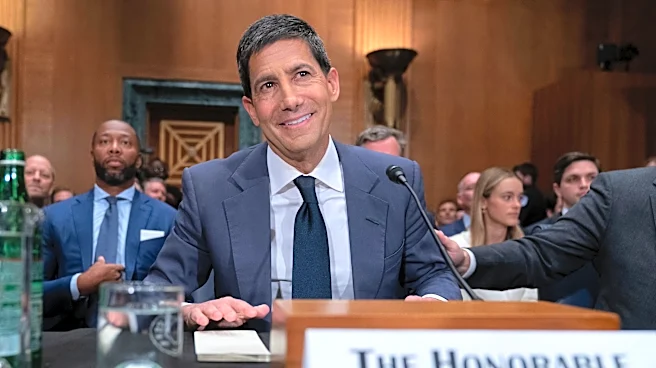
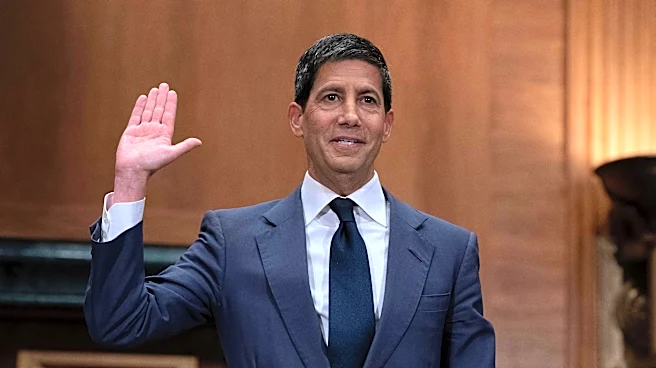
The Senate has confirmed Kevin Warsh as the new chair of the Federal Reserve, succeeding Jerome Powell. The confirmation vote was 54-45, with only one Democrat, Sen. John Fetterman, joining Republicans in support of Warsh. This decision elevates Warsh to
a pivotal role in shaping U.S. economic policy. His confirmation comes amid concerns about the Fed's independence, especially given President Trump's previous criticisms of Powell. Warsh, who served on the Fed's Board of Governors from 2006 to 2011, will face the challenge of addressing rising inflation and a divided Federal Open Market Committee.
Why It's Important?
Warsh's confirmation is crucial as it signals a potential shift in the Federal Reserve's approach to monetary policy. His leadership could influence interest rates, impacting borrowing costs and economic growth. The Fed's independence is a key concern, with Warsh needing to balance political pressures with economic realities. His stance on AI-driven productivity and a new inflation framework suggests a possible departure from Powell's policies. Warsh's ability to drive consensus within the Fed will be vital in navigating economic challenges, including inflation and employment stability.
What's Next?
As chair, Warsh will focus on reforming the Fed's communication and operational strategies. He aims to reduce the Fed's balance sheet and may advocate for a steeper yield curve. Warsh's tenure will involve addressing the perception of the Fed's independence while managing economic policy amidst political scrutiny. His approach to interest rates and economic reforms will be closely monitored by markets and policymakers. Warsh's leadership will be pivotal in shaping the Fed's response to ongoing economic challenges and ensuring stability in financial markets.