
What's Happening?
Unilever is in advanced discussions with McCormick & Company to sell its food business, a move that would allow the British consumer goods giant to concentrate on its beauty, wellbeing, and personal care segments. The potential transaction, which could
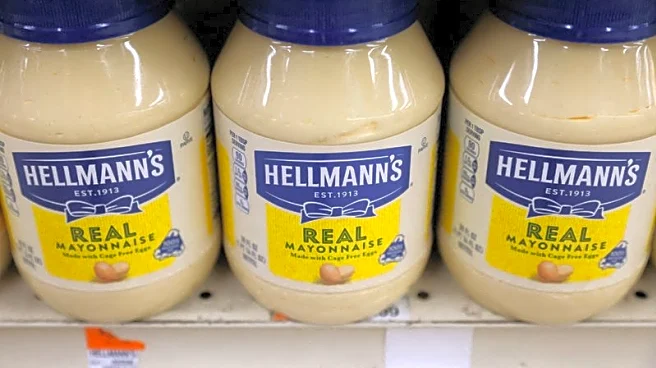
be finalized soon, involves an upfront cash component of approximately $15.7 billion and a significant portion of McCormick equity. If completed, Unilever and its shareholders would hold 65% of the combined company. This strategic shift is part of Unilever's broader plan to enhance its focus on high-performing areas such as beauty and personal care, which have shown robust growth compared to its food division. The food business, which includes brands like Hellmann’s and Marmite, accounted for 26% of Unilever's turnover last year. The deal is structured as a Reverse Morris Trust, intended to be tax-free for U.S. federal income tax purposes.
Why It's Important?
This potential sale marks a significant strategic pivot for Unilever, emphasizing its commitment to expanding its beauty and personal care divisions, which have outperformed other segments. By divesting its food business, Unilever aims to streamline its operations and focus on areas with higher growth potential. This move could reshape the competitive landscape in the consumer goods industry, as Unilever strengthens its position in the beauty market. For McCormick, acquiring Unilever's food business would enhance its product portfolio and market reach. The transaction could also influence investor perceptions and market dynamics, as companies increasingly prioritize core competencies and high-growth sectors.
What's Next?
If the transaction proceeds, Unilever will likely announce the full terms of the sale, including any strategic plans for the combined entity. Stakeholders will be watching closely to see how Unilever reallocates resources to its beauty and personal care divisions and how McCormick integrates the new assets. The deal's completion could prompt further consolidation in the consumer goods sector, as companies seek to optimize their portfolios. Additionally, regulatory approvals and shareholder reactions will be critical factors in the transaction's finalization.