
What's Happening?
The American defense tech consultancy Janus has released a comprehensive review of autonomous naval systems, highlighting a surge in interest in unmanned naval warfare, particularly in the United States.
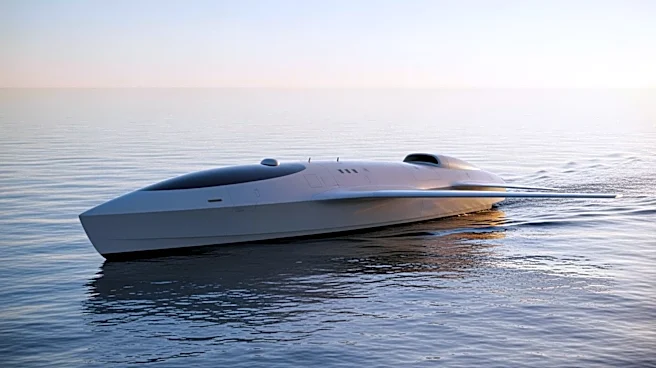
This interest is partly fueled by Ukraine's successful use of unmanned surface vessels (USVs) in the Black Sea. The U.S. Navy is actively backing this technological advancement, although it faces competition from China, which is developing larger and more capable unmanned surface vessels. China's CSSC has unveiled the JARI-USV-A, or Orca, which is significantly larger than the U.S. Navy's Sea Hunter. The Orca is equipped with advanced features such as VLS cells, torpedo tubes, and an AESA radar, making it suitable for operations in areas like the Taiwan Strait. The U.S. market for unmanned vessels is crowded with numerous competitors, including startups and defense primes, which may lead to future industry consolidation.
Why It's Important?
The development of unmanned naval systems represents a significant shift in military strategy and technology, with potential implications for global naval power dynamics. For the U.S., maintaining a competitive edge in this field is crucial for national security and technological leadership. The crowded U.S. market suggests robust innovation but also indicates potential challenges in sustaining multiple companies. The U.S. Navy's focus on production-ready products and reliability at sea underscores the importance of operational effectiveness over mere technological development. China's advancements in unmanned systems, supported by its vast shipyard capacity, pose a strategic challenge to the U.S., emphasizing the need for continued investment and innovation in this area.
What's Next?
The U.S. Navy is expected to move swiftly into production orders under the newly-restructured MUSV marketplace concept. This shift from development programs to production-ready products will likely shape the future landscape of the unmanned naval industry. The structure of upcoming contracts, including the number of companies involved and the variety of hull designs, will be critical in determining the industry's direction. The outcome of these developments will influence the competitive dynamics between the U.S. and other global players, particularly China, in the unmanned naval warfare domain.