



What's Happening?
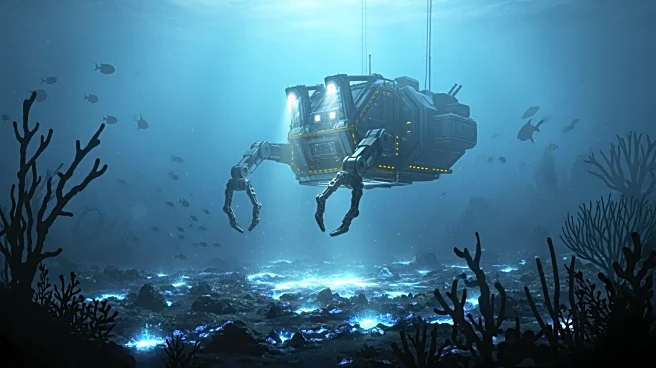
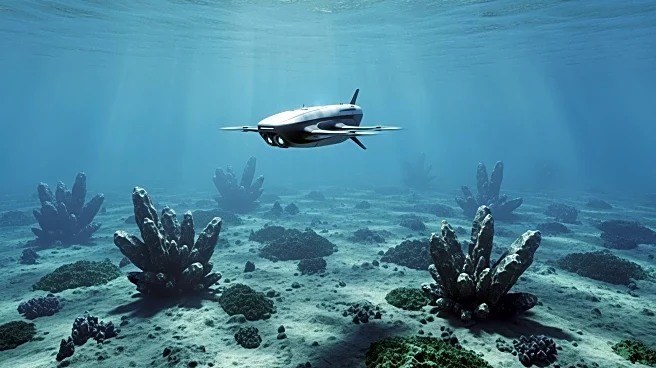
Deep Sea Minerals, a subsea exploration and development company, has filed an application with the U.S. National Oceanic and Atmospheric Administration (NOAA) to explore for critical minerals in the Pacific Ocean. The application, submitted by its U.S. subsidiary
American Ocean Minerals, aims to secure an exploration license for polymetallic nodules in the Clarion-Clipperton Zone, located southwest of Mexico and the United States. This area is estimated to contain over 21.1 billion tons of dry polymetallic nodules. The company's approach includes initial data collection and environmental assessments as part of the regulatory process under the Deep Seabed Hard Mineral Resources Act. The application marks the first step in a phased approach to align with NOAA's requirements, as stated by James Deckelman, CEO of Deep Sea Minerals.
Why It's Important?
The exploration of critical minerals in the Pacific Ocean is significant due to their relevance in various high-demand sectors such as defense, industrial manufacturing, clean energy, advanced electronics, and artificial intelligence. The successful acquisition of an exploration license could position Deep Sea Minerals as a key player in the supply chain for these industries, potentially impacting global markets. The move also highlights the growing interest in deep-sea mining as a means to secure essential resources, which could lead to increased economic activity and technological advancements. However, it also raises environmental concerns and regulatory challenges that need to be addressed.
What's Next?
NOAA will review the application, which includes opportunities for public comments and interagency consultation. The outcome of this review will determine whether Deep Sea Minerals can proceed with its exploration activities. The company's phased approach suggests a commitment to ongoing environmental evaluation, which may influence regulatory decisions. Stakeholders, including environmental groups and industry competitors, are likely to monitor the process closely, potentially influencing public opinion and policy decisions related to deep-sea mining.