





What's Happening?
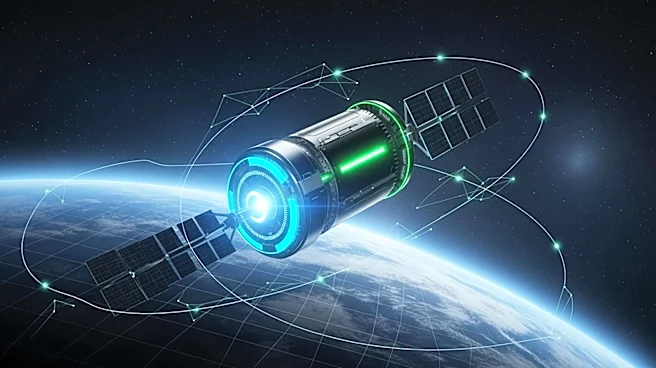
Amazon's satellite internet service, rebranded as Amazon Leo from Project Kuiper, is set to enter commercial availability by mid-2026. The service, which began its enterprise beta on April 8, 2026, offers three terminal tiers with speeds up to 1 Gbps
for enterprise users. Despite having only 210 to 241 satellites in orbit, Amazon faces a Federal Communications Commission (FCC) requirement to have 1,618 satellites operational by July 30, 2026. The company has requested a two-year extension due to a shortage of launch vehicles and has contracted additional launches with SpaceX and Blue Origin to meet its goals.
Why It's Important?
The launch of Amazon Leo is significant as it positions Amazon to compete directly with SpaceX's Starlink, which has already established a strong market presence with over 10 million subscribers. Amazon's strategy involves leveraging partnerships with major carriers like Verizon and AT&T to distribute its service, potentially expanding its reach without directly competing for consumer attention. The success of Amazon Leo could reshape the satellite internet market, offering new options for enterprise and consumer connectivity, and challenging existing players like Starlink.
What's Next?
Amazon's immediate focus is on meeting the FCC's satellite deployment requirements, which involves ramping up its launch schedule. The company has secured additional launch contracts and is seeking an extension to its FCC deadline. If successful, Amazon Leo will not only expand its satellite network but also enhance its service offerings, potentially acquiring Globalstar to gain access to additional spectrum. This expansion could lead to increased competition in the satellite internet market, driving innovation and potentially lowering costs for consumers.