
What's Happening?
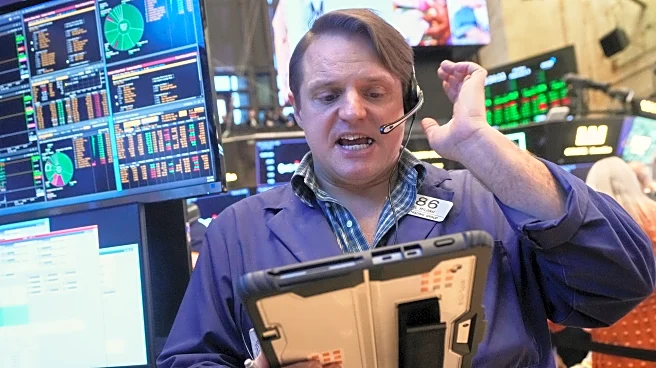
Bank of America Corporation (NYSE: BAC) is experiencing a strong close to 2025, with its stock trading near annual highs. This performance is influenced by a 'Santa rally' on Wall Street and investor optimism about Federal Reserve rate cuts in 2026. On December 24, 2025, BAC shares traded around $56.45, marking an increase of approximately 0.85% from the previous close. The trading session was shortened due to the Christmas Eve holiday, which typically results in lower liquidity and potentially exaggerated price movements. Investors are closely monitoring macroeconomic factors such as the Federal Reserve's recent rate cut of 25 basis points, which lowered the federal funds target range to 3.50%-3.75%. This decision is significant for Bank of America,
as changes in interest rates can substantially impact its net interest income due to the bank's asset-sensitive nature.
Why It's Important?
The performance of Bank of America stock is a key indicator of broader economic trends and investor sentiment. The Federal Reserve's rate cuts are expected to influence the bank's earnings by affecting loan yields and deposit costs. As a major player in the financial sector, Bank of America's stock performance can impact investor confidence and market stability. The bank's ability to maintain strong earnings and capital returns, such as dividends and stock buybacks, is crucial for attracting long-term investors. Additionally, the bank's performance is tied to broader economic conditions, including corporate earnings, AI investments, and regulatory changes. The outcome of these factors will shape the financial landscape in 2026, affecting not only Bank of America but also the wider banking sector.
What's Next?
Looking ahead, Bank of America is set to report its fourth-quarter 2025 earnings on January 14, 2026. This report will provide insights into the bank's net interest income trajectory, deposit pricing, loan growth trends, and credit quality. Investors will also be watching for updates on the bank's capital return strategies, including dividends and buybacks. The Federal Reserve's future rate decisions will continue to be a significant factor influencing the bank's performance. Additionally, the regulatory environment and capital markets activity will play a role in shaping the bank's financial outlook for 2026.