



What's Happening?
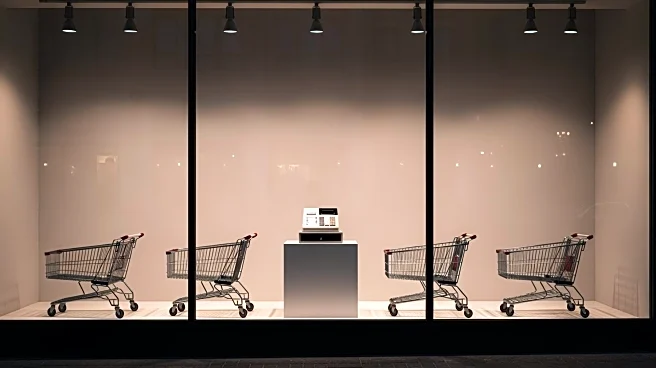
U.S. retail sales remained flat in December, according to the Commerce Department, falling short of the 0.4% gain predicted by economists. This stagnation follows a 0.6% increase in November and comes amid a backdrop of slowing wage growth and rising consumer debt. The Employment Cost Index showed a 0.7% increase in wages and benefits in the fourth quarter, marking the slowest growth since 2021. The data suggests that the U.S. economy ended the year on uncertain footing, with consumers potentially reaching their spending limits due to ongoing affordability concerns.
Why It's Important?
The flat retail sales in December highlight potential challenges for the U.S. economy, as consumer spending is a major driver of economic growth. The stagnation in sales, coupled
with slowing wage growth, could signal a weakening economic outlook. This development may impact businesses, particularly those reliant on consumer spending, and could influence economic policy decisions. The data also underscores the financial pressures faced by lower- and middle-income households, which could exacerbate economic inequality and affect overall economic stability.
What's Next?
Economists and policymakers will closely monitor consumer spending trends and wage growth in the coming months to assess the economic outlook. The Federal Reserve's interest rate decisions and potential fiscal policy measures could be influenced by these developments. Businesses may need to adjust strategies to navigate the uncertain economic environment, while consumers may continue to face financial pressures. The upcoming jobs report will provide further insights into the labor market and its potential impact on consumer spending and economic growth.