


What's Happening?
Recent developments in agentic AI and biotechnology are making significant strides in healthcare and life sciences. Xaira Therapeutics has introduced a new virtual cell model, the largest to date, aimed at advancing complex biological research. In regenerative
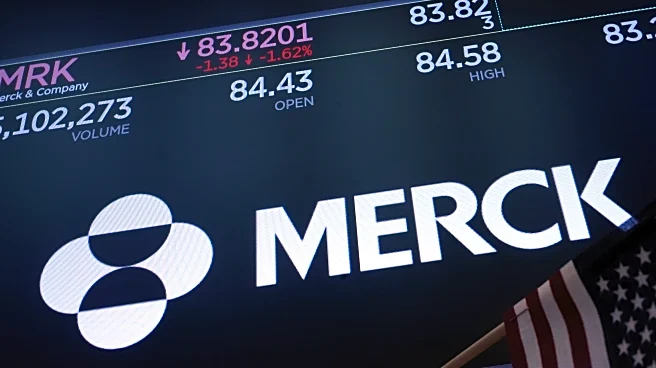
medicine, scientists have engineered lipid nanoparticles (LNPs) to enhance mRNA vaccine delivery to lymph nodes, potentially increasing vaccine efficacy and reducing side effects. Additionally, efforts to develop lab-grown organs have seen success with the implantation of a lab-grown esophagus in pig models. In the pharmaceutical sector, Novartis plans to acquire Pikavation Therapeutics for up to $3 billion to expand its cancer treatment pipeline, while Merck is set to acquire Terns Pharmaceuticals for $6.7 billion, also focusing on cancer therapies.
Why It's Important?
These advancements highlight the transformative potential of AI and biotechnology in healthcare. The development of virtual cell models and improved LNPs could lead to more effective treatments and vaccines, addressing critical health challenges. The acquisitions by Novartis and Merck reflect a strategic focus on expanding cancer treatment options, which could lead to significant improvements in patient outcomes. These innovations not only promise to enhance the efficacy of existing treatments but also pave the way for new therapeutic approaches. The integration of AI in drug development and regenerative medicine underscores the importance of interdisciplinary collaboration in driving medical breakthroughs.