

What's Happening?
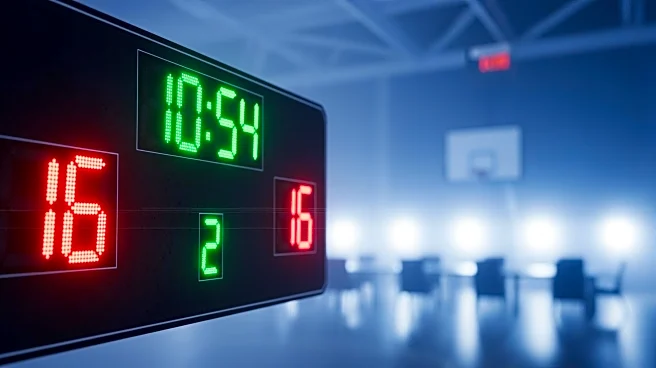
During the Elite Eight matchup between the Iowa Hawkeyes and Illinois Fighting Illini, an unexpected equipment malfunction caused a significant delay. The issue arose when the horn, used to signal player substitutions and timeouts, began to sound continuously
with 7:43 left in the first half. This malfunction was due to a freeze in the scoreboard control system, which also affected the integrated horn. The incessant noise lasted approximately seven minutes, leading to an impromptu break for the players. NCAA Senior Vice President Dan Gavitt issued a statement explaining the situation and the steps taken to address it, including shutting down the main center-hung videoboard connected to the horn. Despite the disruption, the game resumed with Iowa initially extending their lead, but Illinois ultimately won the game 71-59, securing a spot in the Final Four.
Why It's Important?
The incident highlights the potential impact of technical malfunctions on major sporting events, emphasizing the need for robust contingency plans. Such disruptions can affect the momentum and performance of teams, as well as the experience for fans and viewers. The NCAA's response to the malfunction demonstrates the importance of quick decision-making and effective communication in managing unexpected challenges. This event also underscores the reliance on technology in modern sports and the necessity for reliable systems to ensure smooth operations. The outcome of the game, with Illinois advancing to the Final Four, also has implications for the teams involved, affecting their preparation and strategy for upcoming matches.
What's Next?
Following the resolution of the malfunction, the NCAA may review its equipment and procedures to prevent similar issues in future games. Teams like Illinois, now advancing to the Final Four, will focus on preparing for their next opponent, either the Duke Blue Devils or UConn Huskies. The NCAA might also consider implementing additional backup systems or protocols to handle equipment failures more efficiently. Fans and stakeholders will be watching closely to see how the NCAA addresses these technical challenges and ensures the integrity of the tournament.