


What's Happening?
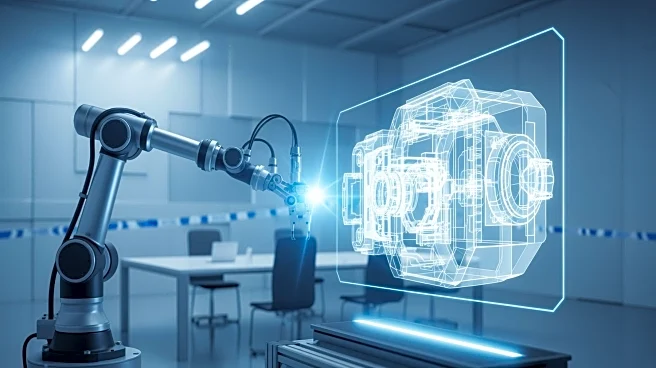
The U.S. manufacturing sector is poised for a significant transformation by 2030, driven by advancements in artificial intelligence (AI). According to a recent analysis, AI technologies such as generative and agentic AI are expected to rewire manufacturing operations,
enhancing efficiency and productivity. The report highlights that traditional manufacturing processes, which were initially designed during the analog era and later digitized, will undergo a complete reimagination to integrate AI. This shift will involve breaking down operational silos and creating intelligent, responsive manufacturing workflows across the entire value chain, from procurement to customer service. Additionally, manufacturing teams will transition from merely working with AI to orchestrating AI agents, allowing for more innovative and problem-solving opportunities. The implementation of autonomous workflows is anticipated to pave the way for autonomous plants, where critical processes run end-to-end without human intervention.
Why It's Important?
The integration of AI into U.S. manufacturing is crucial for maintaining global competitiveness and addressing the challenges posed by rapid technological advancements. By adopting AI-driven processes, manufacturers can enhance operational efficiency, reduce costs, and improve product quality. This transformation is expected to shift the focus from traditional output volume metrics to value-driven metrics, such as first-pass yield and mean time between failures. As AI takes over routine tasks, human workers will have more time to focus on innovation and strategic decision-making, fostering a culture of continuous improvement. The ability to simulate decisions using digital twins before implementation will minimize risks and accelerate the pace of innovation. Overall, this AI-driven transformation will empower the U.S. manufacturing sector to compete more effectively on a global scale, ensuring long-term economic growth and resilience.
What's Next?
As the path to 2030 unfolds, manufacturers are encouraged to begin with pilot projects that demonstrate measurable wins. This involves implementing autonomous workflows in controlled environments and mapping cross-functional work patterns. Success will be defined beyond traditional key performance indicators, focusing on efficiency and workforce empowerment. Continuous learning and upskilling will be essential to ensure that the workforce remains adaptable to technological advancements. Transparent communication and a focus on both efficiency and workforce empowerment will be critical in navigating this transformation. By leveraging American manufacturing expertise and cutting-edge AI capabilities, the sector aims to build more resilient and responsive operations, setting the stage for a future designed on its own terms.