
What's Happening?
Wall Street's largest banks, including JP Morgan Chase, Citigroup, and Wells Fargo, have reported record earnings for the first quarter of the year. According to the Financial Times, these banks have collectively
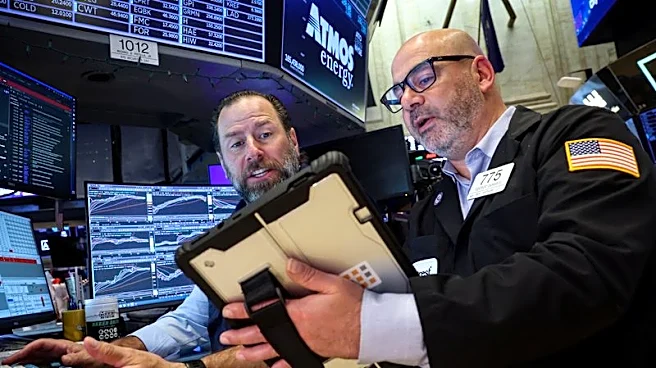
generated over $25 billion in profits. This surge in earnings is attributed to the market volatility caused by the ongoing conflict in Iran. The banks have capitalized on sharp market movements, which have not been offset by higher oil prices affecting U.S. borrowers. The report highlights how traders at these financial institutions have thrived in the current economic climate, leveraging the instability to boost profits significantly.
Why It's Important?
The record earnings reported by major Wall Street banks underscore the financial sector's ability to adapt and profit from geopolitical instability. This development highlights the resilience and opportunistic nature of financial markets, where volatility can lead to substantial gains for traders. However, it also raises questions about the broader economic impact of such conflicts, particularly on consumers and businesses that may face higher costs due to increased market uncertainty. The banks' performance may influence investor confidence and market dynamics, potentially affecting economic policy decisions and regulatory scrutiny.
What's Next?
As the Iran conflict continues, financial markets are likely to remain volatile, providing further opportunities for banks to capitalize on market fluctuations. However, sustained geopolitical tensions could lead to broader economic repercussions, prompting policymakers to consider measures to stabilize markets and protect consumers. Additionally, regulatory bodies may scrutinize the banks' practices to ensure that their profit-making strategies do not exacerbate economic inequalities or contribute to financial instability.