
What's Happening?
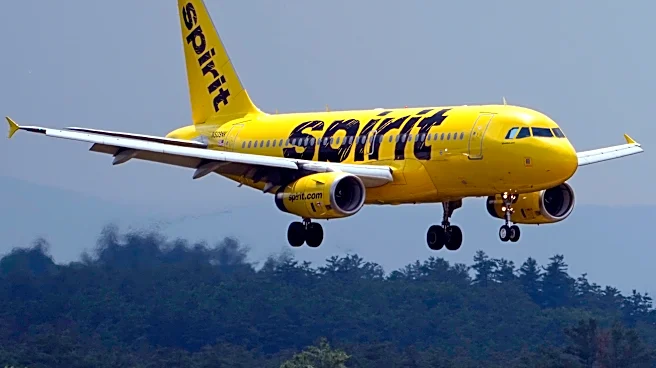
Spirit Airlines has announced an immediate shutdown of its operations following the collapse of a proposed bailout by the White House. The budget airline, which has been struggling financially, cited the recent
surge in oil prices and other economic pressures as significant factors impacting its viability. The airline had been in discussions with the federal government for a $500 million rescue plan that would have involved a substantial government ownership stake. However, the deal did not materialize, leading to the decision to wind down operations. All Spirit flights have been canceled, and the airline is processing refunds for affected passengers. Transportation Secretary Sean P. Duffy has outlined measures to assist stranded passengers, including capped ticket prices and reduced fares on certain routes.
Why It's Important?
The shutdown of Spirit Airlines marks a significant shift in the U.S. airline industry, particularly affecting budget-conscious travelers who relied on its low-cost services. The closure could lead to increased airfares as competition diminishes, especially on routes where Spirit was a major player. The airline's demise also highlights the broader economic challenges facing the aviation sector, including rising fuel costs and competitive pressures. Over 10,000 jobs are at risk, impacting employees and their families. The situation underscores the complexities of government intervention in private enterprises and the challenges of sustaining operations amid economic volatility.
What's Next?
In the wake of Spirit Airlines' shutdown, other airlines such as American, Frontier, and United have stepped in to offer support to stranded passengers and employees. These airlines are providing discounted fares and additional routes to accommodate affected travelers. The industry will be closely watching how remaining budget carriers adjust their pricing strategies in the absence of Spirit. Additionally, there may be discussions on policy measures to prevent similar situations in the future, focusing on financial stability and competitive practices within the airline industry.
Beyond the Headlines
The closure of Spirit Airlines raises questions about the sustainability of ultra-low-cost carriers in a volatile economic environment. The airline's business model, which relied heavily on ancillary fees, may come under scrutiny as the industry evaluates the balance between low fares and financial health. The situation also highlights the potential impact of geopolitical events, such as conflicts affecting oil prices, on the airline industry. As the market adjusts, there may be opportunities for other budget airlines to expand their presence, but they will need to navigate the same economic challenges that contributed to Spirit's downfall.