






What's Happening?
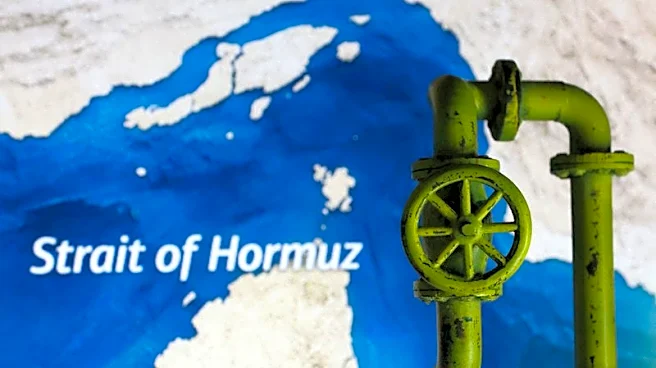
Goldman Sachs has issued a warning regarding the vulnerability of copper prices due to the ongoing conflict involving Iran. The potential blockage of the Strait of Hormuz, a critical chokepoint for global oil shipments, has led to increased energy prices,
which in turn threaten to stifle economic growth and reduce demand for industrial commodities like copper. The bank's analysts have noted that copper is trading above its estimated fair value, and prices have already fallen by about 7% following recent military actions by the U.S. and Israel against Iran. Despite some support from a tight market and strategic stockpiling, the analysts caution that copper prices could decline further if the economic outlook worsens.
Why It's Important?
The situation underscores the interconnectedness of geopolitical events and global economic stability. The potential disruption of the Strait of Hormuz could have far-reaching implications for energy prices and economic growth, affecting industries reliant on stable commodity prices. Copper, a key industrial metal, is particularly sensitive to economic fluctuations, and its price movements can signal broader economic trends. The warning from Goldman Sachs highlights the risks to investors and industries dependent on copper, as well as the potential for increased volatility in global markets.
What's Next?
Goldman Sachs anticipates that the Strait of Hormuz may begin to reopen from mid-April, which could stabilize energy prices and alleviate some pressure on copper prices. However, the situation remains fluid, and further military or diplomatic developments could alter the outlook. Investors and industries will likely monitor the situation closely, adjusting their strategies in response to changes in geopolitical dynamics and market conditions. The potential for further economic disruption may prompt governments and businesses to reassess their risk management and contingency planning strategies.