





What's Happening?
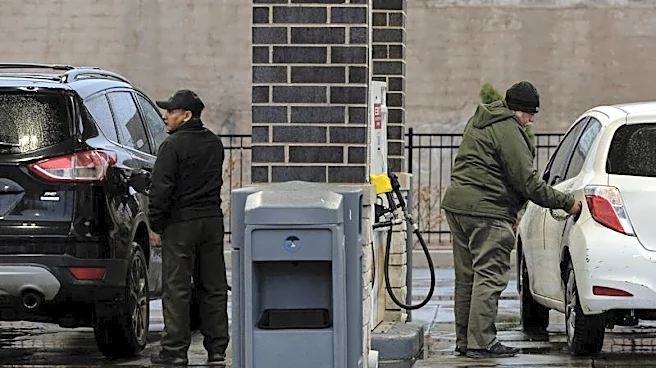
In March 2026, the United States experienced a significant increase in inflation, driven by a sharp rise in gas prices. The Labor Department reported a 3.3% increase in consumer prices from a year earlier, marking the largest monthly jump in gas prices in six
decades. This surge is attributed to the ongoing conflict in Iran, which has disrupted oil supplies and led to higher energy costs. The Federal Reserve, tasked with managing inflation, faces heightened challenges as the inflation rate moves further away from its 2% target. The increase in gas prices has not yet spread to other categories, with core prices rising modestly by 0.2% last month.
Why It's Important?
The spike in gas prices has significant implications for the U.S. economy, affecting consumer confidence and political sentiment. Higher gas prices reduce consumers' ability to spend on other goods and services, potentially slowing economic growth. The Federal Reserve may need to reconsider its interest rate policies, as the inflation trajectory has shifted from a gradual decline to a sharp increase. This situation mirrors past economic disruptions, such as President Trump's tariffs, where the impact depended on the size and duration of the increase. The broader question is whether this surge will lead to a sustained inflation shock similar to the post-pandemic period.
What's Next?
The Federal Reserve is likely to postpone any interest rate cuts for months, with some officials considering rate hikes if inflation does not cool. The impact of higher gas prices is expected to be confined to energy-intensive industries, such as airlines and public transportation, in the short term. Analysts predict that food prices, which have already risen by 25% since the pandemic, may not accelerate further for another month or two. The central bank will closely monitor economic developments and adjust its policies accordingly.