
What's Happening?
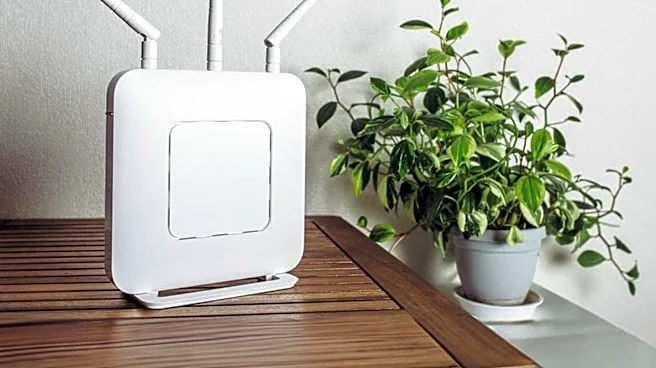
Many households experience weak Wi-Fi signals due to poor router placement, particularly with mesh routers. Proper placement is crucial for maximizing Wi-Fi coverage and eliminating dead zones. Routers
should be placed centrally and elevated to ensure signals radiate outward and downward effectively. Mesh systems require strategic placement of extenders, ideally no more than two rooms apart, to maintain strong connections. Physical obstructions like walls and furniture can impede signals, so routers and extenders should be positioned in open spaces. Using long Ethernet cables can help position routers optimally, away from modems.
Why It's Important?
With the increasing reliance on home internet for work, education, and entertainment, ensuring robust Wi-Fi coverage is essential. Poor router placement can lead to connectivity issues, affecting productivity and user experience. As internet costs rise, optimizing existing equipment can be a cost-effective solution for improving service without upgrading plans. Understanding and implementing effective router placement strategies can significantly enhance internet performance, benefiting households by providing stable and fast connections throughout the home.
What's Next?
Homeowners are encouraged to assess their current router setups and make necessary adjustments to improve Wi-Fi coverage. This may involve repositioning routers and extenders, using diagnostic tools to check signal strength, and running speed tests to identify weak spots. As technology evolves, staying informed about new router models and features can help users maintain optimal internet performance. Additionally, consulting with internet service providers for potential plan upgrades or equipment updates may further enhance connectivity.