







What's Happening?
The AI in Agriculture Market is projected to grow significantly, from over $4.7 billion to $46.6 billion by 2034, according to a study by Global Market Insights. The increasing adoption of AI technologies is enhancing agricultural productivity, optimizing
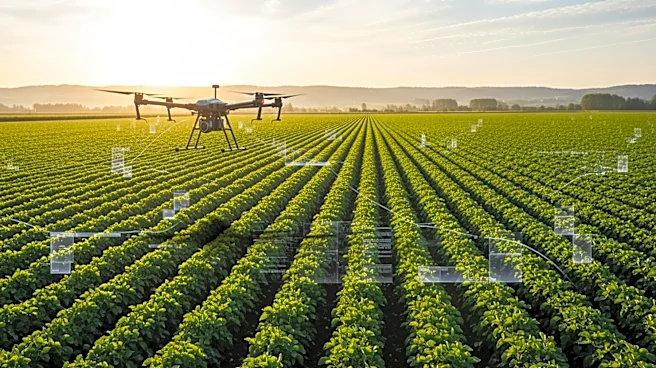
resource utilization, and addressing labor shortages. AI applications, such as machine learning algorithms, predictive analytics, and automation, are being utilized to improve crop monitoring, disease detection, irrigation management, and yield forecasting. Machine learning held a significant market share of 50% in 2024 and is expected to experience substantial growth. These technologies empower farmers to harness real-time insights from vast datasets, helping them optimize resource use, minimize crop losses, and enhance overall yield quality.
Why It's Important?
The growth of AI in agriculture is crucial for meeting the global demand for food in a resource-constrained world. By integrating AI into farm operations, producers can anticipate challenges, reduce waste, and respond quickly to environmental changes. This precision-driven approach improves operational efficiency while promoting sustainable agricultural methods. The scalability and flexibility of AI solutions make them applicable across various crops, geographies, and farming practices, enhancing their affordability and effectiveness. The U.S. is a leader in this market, with major technology firms investing in AI to develop agricultural productivity solutions, positioning the country at the forefront of AI applications in agriculture.
What's Next?
The AI in agriculture market is expected to continue its rapid growth, driven by the need for sustainable farming practices and the increasing global demand for food. Companies are focusing on strategic initiatives such as research and development, collaborations, and partnerships to develop AI-driven solutions that address broader challenges like food security and climate change. Expanding their global footprint by entering new markets and establishing a presence in key regions is another strategy to capture a larger market share. The continued development and deployment of AI technologies will likely lead to further advancements in agricultural productivity and sustainability.