






What's Happening?
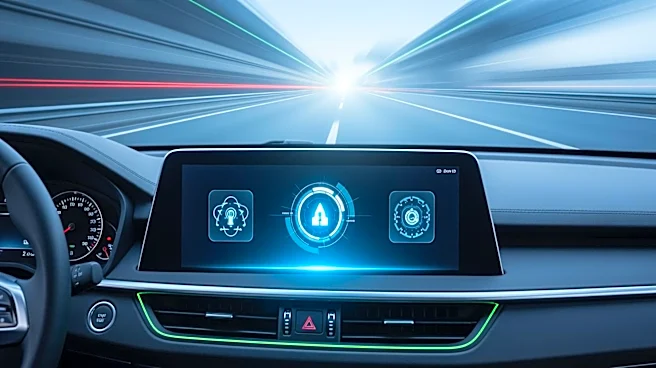
Motive has launched a suite of AI-powered tools aimed at improving driver safety by detecting fatigue, eating, and collision events in real time. These tools are part of Motive's AI platform for physical operations, designed to provide organizations with
early visibility into unsafe driving behaviors and enhance incident response. The new features include Fatigue Detection, which identifies warning signs such as yawning and lane swerving; Eating Detection, which flags high-risk distractions when food is consumed for more than five seconds; and Collision Detection, which uses telematics and computer vision to identify low-severity incidents like sideswipes. The system operates using on-device AI and existing AI dashcams, requiring no additional hardware, and integrates an Event Validation Engine to reduce false positives.
Why It's Important?
The introduction of these AI tools by Motive is significant as it addresses the critical issue of preventable road accidents caused by driver fatigue and distractions. By detecting subtle signs of fatigue and distraction early, the system allows for timely interventions, potentially reducing the number of accidents and enhancing road safety. This development is particularly important for industries reliant on transportation and logistics, where driver safety is paramount. The ability to accurately detect and respond to risky behaviors can lead to fewer accidents, lower insurance costs, and improved operational efficiency for companies. Additionally, the integration of AI in driver safety reflects a broader trend towards leveraging technology to enhance human capabilities and improve safety standards.
What's Next?
As Motive's AI tools are adopted, it is likely that more organizations will integrate similar technologies to enhance driver safety. The success of these tools could lead to further innovations in AI-driven safety solutions, potentially expanding beyond the transportation sector. Stakeholders such as insurance companies, regulatory bodies, and fleet operators may closely monitor the impact of these tools on accident rates and safety records. Future developments may include enhancements to the AI algorithms for even greater accuracy and the introduction of additional features to address other safety concerns.