


What's Happening?
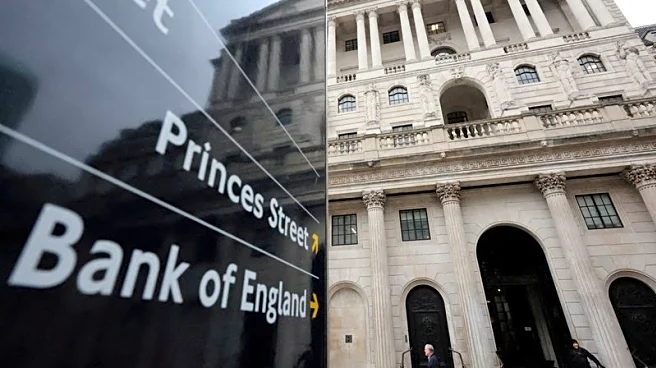
The Bank of England has decided to maintain its key interest rate at 3.75% during its latest meeting, despite previous expectations of a rate cut. This decision comes in the wake of the ongoing conflict in the Middle East, which has led to a spike in oil
prices and increased economic uncertainty. The central bank's monetary policy committee is opting for caution as it assesses the potential duration and impact of the conflict. Economists had anticipated a rate cut to alleviate pressure on households and businesses facing high borrowing costs, but the current geopolitical situation has shifted these expectations. The Bank of England, along with other European central banks, is closely monitoring the situation as it threatens energy supplies and economic stability across the region.
Why It's Important?
The decision to hold interest rates steady is significant as it reflects the Bank of England's cautious approach in the face of geopolitical instability. The conflict in the Middle East has disrupted economic forecasts, particularly concerning inflation and energy prices. By maintaining the current rate, the Bank of England aims to avoid exacerbating economic volatility. This decision impacts businesses and consumers who are dealing with high borrowing costs, as a rate cut could have provided some financial relief. The broader implications include potential shifts in monetary policy across Europe, as central banks navigate the challenges posed by the conflict and its effects on energy markets and inflation.
What's Next?
The Bank of England will continue to monitor the situation closely, with future rate decisions likely influenced by the conflict's duration and impact on global energy prices. Economists suggest that while a rate cut is off the table for now, the possibility of a rate increase later in the year cannot be dismissed if inflationary pressures persist. The central bank's next steps will depend on how the geopolitical landscape evolves and its effects on the UK economy. Stakeholders, including businesses and policymakers, will be watching for any signs of change in the Bank of England's monetary policy stance.