






What's Happening?
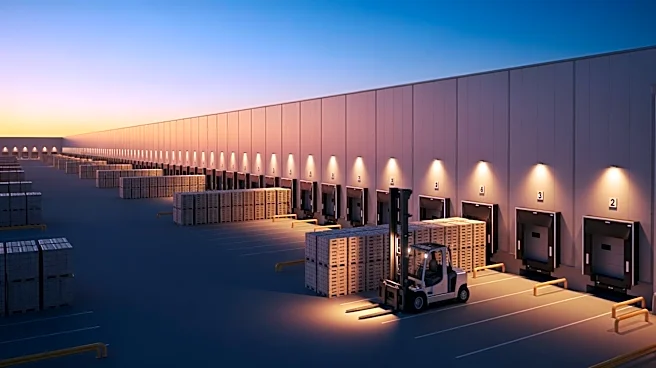
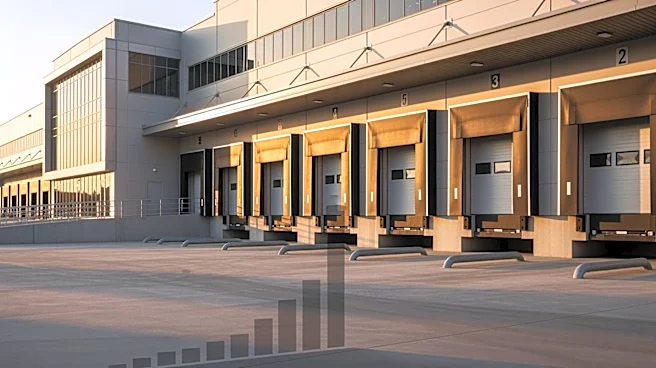
CoStar Group, a leader in commercial real estate information and analytics, has reported a decline in the supply of big-box warehouses in the Midlands. This shift follows a peak in supply earlier in the year, with availability dropping by approximately
5 million square feet due to increased occupier demand and a slowing construction pipeline. Despite this reduction, the supply remains historically high at around 30 million square feet. The demand is particularly strong in established distribution locations with good motorway access, leading to a take-up of about 6 million square feet in the early months of the year. Construction activity has also decreased significantly, with 70% of the region's big-box space under construction already pre-let, resulting in a 40% smaller pipeline compared to two years ago.
Why It's Important?
The decline in big-box warehouse supply in the Midlands is significant for the commercial real estate market, indicating a potential shift in market dynamics. As demand continues to rise and construction slows, the balance of power may begin to shift back towards landlords, especially those owning high-quality warehouses. This could lead to stabilization in rental levels and incentives after a period of subdued activity. The changes in supply and demand dynamics could impact rental growth, making it more selective and scheme-specific. For businesses relying on logistics and distribution, securing space may become more competitive, potentially affecting operational costs and strategies.
What's Next?
As the market adjusts to these new conditions, stakeholders in the commercial real estate sector will likely monitor the situation closely. Landlords may find themselves in a stronger negotiating position, potentially leading to changes in lease terms and rental agreements. Businesses seeking warehouse space might need to act more swiftly to secure desirable locations. Additionally, the slowdown in construction could prompt developers to reassess their strategies, possibly leading to a focus on pre-letting agreements to mitigate risks. The evolving market conditions could also influence future investment decisions in the real estate sector.