





What's Happening?
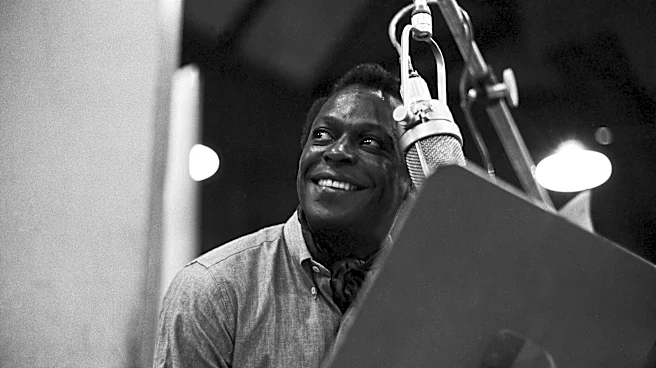
Miles Davis, the legendary jazz musician, is being celebrated as he would have turned 100 this year. Known for his profound impact on jazz and American music, Davis's work continues to resonate with audiences worldwide. His album 'Kind of Blue' remains
a seminal piece in jazz history, showcasing his innovative approach to music. Davis's influence extends beyond music, as he was also a cultural icon known for his fashion and his role in the civil rights movement. Despite his musical genius, Davis's legacy is complex, marred by his admitted history of violence against women, which continues to spark discussions about the duality of his contributions and personal life.
Why It's Important?
Miles Davis's centennial offers an opportunity to reflect on his significant contributions to music and culture. His work in jazz not only transformed the genre but also influenced other music styles, including rock and hip-hop. Davis's ability to blend different musical elements has inspired countless artists and continues to shape the music industry. However, the darker aspects of his personal life, particularly his treatment of women, highlight the ongoing conversation about separating an artist's work from their personal actions. This duality challenges fans and historians to reconcile his artistic achievements with his personal failings, prompting broader discussions about accountability and legacy in the arts.
Beyond the Headlines
The celebration of Miles Davis's legacy also brings to light the broader cultural and historical context of his life. As a Black artist in America, Davis navigated a landscape of racial tension and social change, using his platform to challenge norms and advocate for civil rights. His music served as a form of resistance and expression, reflecting the struggles and triumphs of the African American community. This aspect of his legacy underscores the power of art as a tool for social change and the importance of acknowledging the full spectrum of an artist's impact, both positive and negative.