


What's Happening?
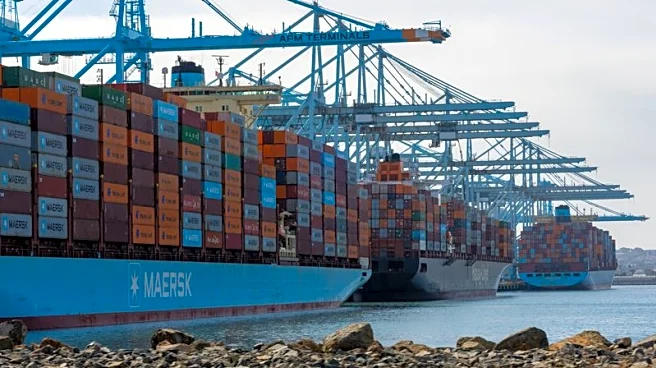
A federal trade judge has mandated the Trump administration to refund over $130 billion in tariffs following a Supreme Court decision that invalidated the levies. Judge Richard Eaton of the Court of International Trade issued the order, directing U.S.
Customs and Border Protection to calculate and refund the duties paid by importers. This decision comes after the Supreme Court struck down the tariffs, which were initially imposed under the International Emergency Economic Powers Act. The administration plans to appeal the order, which could delay the refunds. Meanwhile, over 2,000 lawsuits have been filed by companies seeking to recover the tariffs, including major firms like Costco and FedEx. The administration has announced a new round of tariffs under a different statute, Section 122 of the Trade Act of 1974, with plans to increase the global tariff rate from 10% to 15%.
Why It's Important?
The refunding of $130 billion in tariffs is significant as it impacts numerous U.S. businesses that have been financially burdened by these levies. The Supreme Court's decision and the subsequent order for refunds highlight the legal challenges surrounding the use of emergency powers for trade policy. This development could lead to increased scrutiny of tariff impositions and their economic implications. The potential increase in tariffs to 15% under a new statute could further affect U.S. consumers and businesses, potentially leading to higher prices and economic uncertainty. The legal battles and the administration's response underscore the ongoing tensions in U.S. trade policy and its impact on the economy.
What's Next?
The Trump administration is expected to appeal the federal judge's order, which could delay the refund process. Additionally, a coalition of state attorneys general, including New York's Letitia James, plans to file a lawsuit opposing the revised tariff regime, arguing it circumvents the Supreme Court's ruling. The outcome of these legal challenges will be crucial in determining the future of U.S. tariff policy and its economic impact. Businesses and legal experts will closely monitor the situation as it unfolds, with potential implications for international trade relations and domestic economic policy.