

What's Happening?
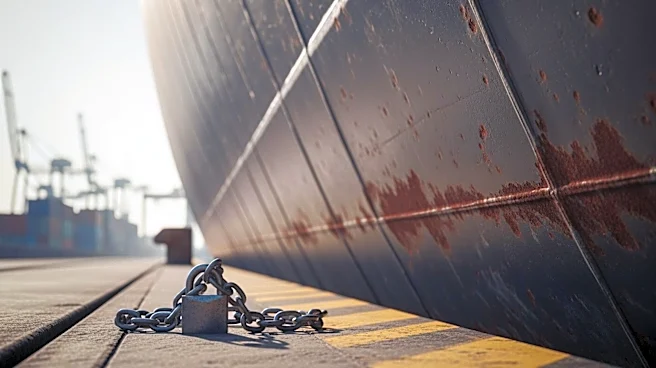
The maritime industry is grappling with significant challenges related to hull maintenance and security. As fuel costs fluctuate, operators are scrutinizing factors affecting vessel efficiency, with hull condition being a critical component. Traditional
maintenance models are proving inadequate, especially as biofouling accelerates during idle times, such as port congestion or mechanical downtime. This fouling can increase fuel consumption by up to 30%, leading to substantial financial implications. Additionally, hulls are becoming security vulnerabilities, as evidenced by recent incidents where magnetic mines were discovered on vessels during routine port delays. The industry is urged to adopt continuous hull performance programs, like EverClean by Greensea IQ, which offer proactive maintenance and security solutions.
Why It's Important?
The issues surrounding hull maintenance and security have broad implications for the maritime industry. Rising fuel costs and inefficiencies due to biofouling can significantly impact operational budgets, affecting shipping companies' bottom lines. Moreover, the security risks associated with hulls, such as the potential for sabotage with magnetic mines, pose threats to vessel safety and cargo integrity. These challenges necessitate a shift towards more proactive and continuous maintenance strategies, which can enhance both operational efficiency and security. The adoption of such programs could lead to substantial cost savings and risk mitigation, making them crucial for the industry's resilience.
What's Next?
The maritime industry is likely to see increased adoption of advanced hull maintenance technologies and security protocols. Companies may invest in systems like EverClean to maintain hull cleanliness and detect security threats in real-time. This shift could also prompt regulatory bodies to implement stricter guidelines for hull inspections and maintenance. As the industry adapts to these challenges, collaboration between technology providers and shipping companies will be essential to develop effective solutions. The focus will be on integrating these technologies into existing workflows without significant infrastructure changes, ensuring seamless operations.
Beyond the Headlines
The deeper implications of these challenges extend to environmental and regulatory aspects. Biofouling not only affects fuel efficiency but also contributes to the spread of invasive marine species, raising ecological concerns. Regulatory bodies may impose stricter environmental standards, pushing the industry towards sustainable practices. Additionally, the security risks highlight the need for international cooperation in maritime safety, as threats can arise in any port. The industry's response to these challenges could set precedents for future maritime operations, emphasizing the importance of innovation and adaptability.