

What's Happening?
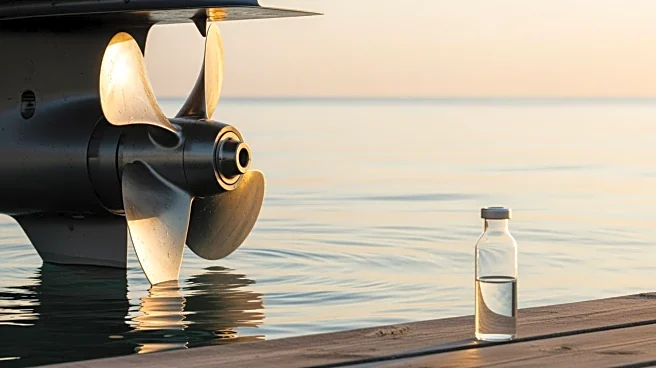
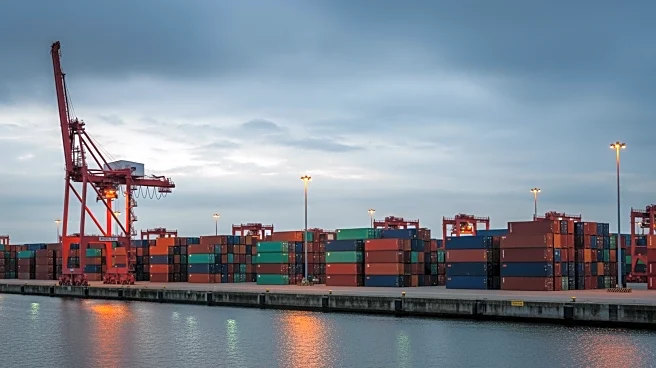
CMA CGM and SIPG Energy have completed a significant bio-methanol bunkering operation at Yangshan Port in Shanghai, marking CMA CGM's first such operation globally. This event sets a new record for the largest single bio-methanol bunkering at a Chinese
port. The initiative is part of CMA CGM's strategy to achieve Net Zero Carbon by 2050, with plans to operate around 200 dual-fuel vessels by 2031. Bio-methanol is gaining traction as a sustainable alternative fuel due to its low emissions and compatibility with existing infrastructure. However, challenges such as high costs and limited availability remain.
Why It's Important?
The adoption of bio-methanol as a maritime fuel represents a significant step towards reducing the shipping industry's carbon footprint. As a sulfur-free fuel with low emissions, bio-methanol offers environmental benefits and aligns with global efforts to combat climate change. The maritime industry is under pressure to transition to cleaner fuels, and bio-methanol's compatibility with existing infrastructure makes it an attractive option. However, the high cost and limited production capacity pose challenges to widespread adoption. The industry's shift towards sustainable fuels could drive innovation and investment in alternative energy sources.
What's Next?
The maritime industry will need to address the challenges of cost and availability to increase the adoption of bio-methanol. Continued investment in production capacity and infrastructure will be crucial. Partnerships and agreements, like the one between Equinor and Wallenius Wilhelmsen, will play a key role in expanding bio-methanol's use. The industry will also need to balance the transition to alternative fuels with the risk of capital lock-in and the entrenchment of existing fossil fuel infrastructure. Ongoing research and development will be essential to overcome these barriers and achieve long-term sustainability goals.