


What's Happening?
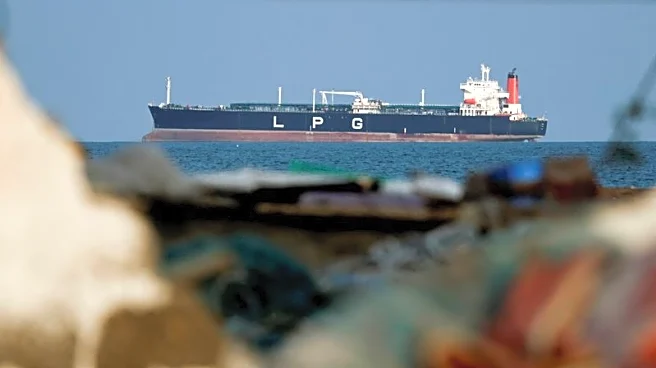
The U.S. is contemplating the removal of sanctions on approximately 140 million barrels of Iranian oil currently stranded on tankers, as part of efforts to stabilize global oil supplies and reduce prices. Treasury Secretary Scott Bessent indicated that
this move could provide 10 to 14 days of supply, helping to counteract the deficit caused by the closure of the Strait of Hormuz. This decision follows a similar action with Russian oil, which added 130 million barrels to global supplies. The U.S. is also considering additional releases from its Strategic Petroleum Reserve to further bolster supply.
Why It's Important?
The potential lifting of sanctions on Iranian oil is a strategic move to address the significant supply disruptions caused by the conflict in the Middle East. By increasing the availability of oil, the U.S. aims to mitigate the impact of rising oil prices, which have exceeded $100 per barrel. This action is crucial for maintaining economic stability and preventing further strain on consumers and industries dependent on oil. The decision reflects the U.S. government's focus on physical market interventions to manage the energy crisis and underscores the geopolitical complexities of balancing sanctions with global supply needs.
What's Next?
If the U.S. proceeds with lifting sanctions on Iranian oil, it could lead to a temporary stabilization of oil prices. The administration's actions will be closely watched by international markets and could influence diplomatic relations with key oil-producing nations. Further strategic petroleum releases may be necessary if the situation in the Strait of Hormuz does not improve. The U.S. will continue to engage with international partners to ensure the security of oil transport routes and address the broader implications of the ongoing conflict.