
What's Happening?
Zhipu, a Chinese artificial intelligence company, saw its shares surge by 35% after reporting a 132% increase in revenue in its first earnings report. Despite this growth, the company reported a net adjusted loss of 3.18 billion yuan due to increased
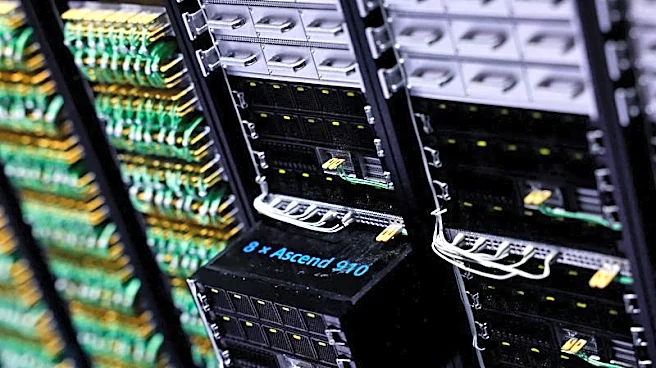
research and development spending. Zhipu, known for its large language models, has been accelerating its use of domestic Chinese chips to meet rising computing demand, aligning with Beijing's push to develop its semiconductor industry. The company has been constrained by U.S. export restrictions, which have limited its access to advanced semiconductor technology.
Why It's Important?
Zhipu's revenue growth and strategic shift towards domestic chip usage highlight the broader trend of China's efforts to reduce reliance on foreign technology amid geopolitical tensions. The company's performance serves as a barometer for China's AI sector, reflecting the country's push to become a leader in artificial intelligence. The U.S. export restrictions have prompted Chinese companies to innovate and adapt, potentially leading to increased competition in the global AI market. This development could have significant implications for U.S. tech companies and the global semiconductor industry.
What's Next?
As Zhipu continues to expand its AI offerings and leverage domestic technology, it may further solidify its position in the Chinese market. The company's growth could encourage other Chinese tech firms to follow suit, potentially reshaping the global AI landscape. The U.S. may need to reassess its export control policies to balance national security concerns with the potential impact on American tech companies' competitiveness. Additionally, the ongoing U.S.-China tech rivalry may lead to further policy developments and strategic shifts in both countries.