



What's Happening?
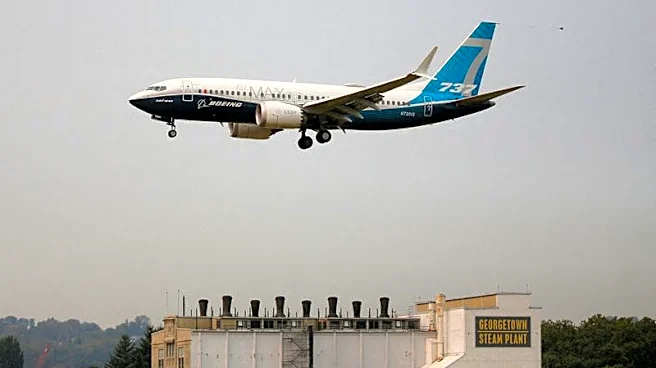
In May 2026, Boeing significantly increased its aircraft delivery rate, reaching 60 aircraft, the highest monthly delivery this year. This included 51 737 Max jets, one 737NG-based military aircraft, six 787s, one 767 Freighter, and one 777F. Despite
this increase, Boeing secured net new orders for only 22 jets due to cancellations. The company moved orders for 11 aircraft from a category of deals not expected to close into its backlog, indicating a positive outlook for these sales. However, the backlog decreased slightly to 6,178 jets by the end of May, down from 6,216 in April. Gross orders for the month included 27 aircraft, with notable orders from Lufthansa and Tui Travel Aviation Finance.
Why It's Important?
Boeing's increased delivery rate is a significant development for the aerospace industry, reflecting the company's efforts to ramp up production and meet demand. However, the net new orders being low due to cancellations highlights ongoing challenges in the market, such as fluctuating demand and potential financial constraints faced by airlines. The decrease in backlog suggests that while production is up, securing new orders remains a challenge. This situation impacts Boeing's financial health and its ability to maintain a competitive edge in the global aerospace market. The company's ability to convert potential deals into confirmed sales will be crucial for its future growth.
What's Next?
Boeing's future actions will likely focus on stabilizing its order book and addressing the reasons behind the cancellations. The company may need to engage more with customers to understand their needs and adjust its offerings accordingly. Additionally, Boeing's production strategy will be closely watched by industry analysts to see if the increased delivery rate can be sustained. The company's performance in the coming months will be critical in determining its market position and financial stability.