



What's Happening?
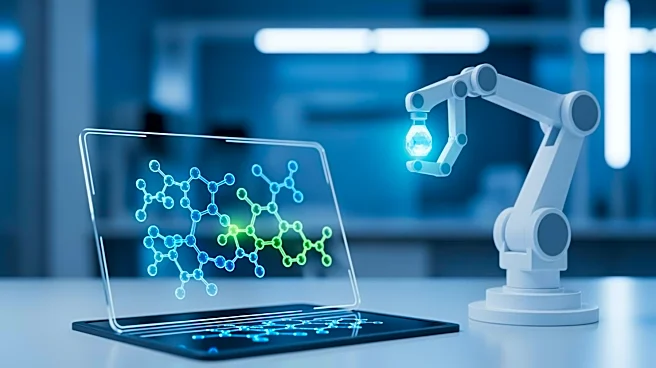
OpenAI has introduced GPT-Rosalind, a new AI model designed to expedite drug discovery and support research in biology-related fields. Named after Rosalind Franklin, a pioneer in X-ray crystallography, GPT-Rosalind aims to enhance tasks such as evidence
synthesis, hypothesis generation, and experimental planning. This launch marks OpenAI's expansion into the life sciences sector, following a strategic alliance with Novo Nordisk. The model is available as a research preview in ChatGPT and as an API for OpenAI's life science partners. It integrates with OpenAI's Codex, a cloud-based AI software engineering agent, and connects to over 50 scientific tools and data sources. OpenAI is collaborating with companies like Amgen and Moderna to apply GPT-Rosalind to research workflows.
Why It's Important?
The introduction of GPT-Rosalind represents a significant advancement in the field of pharmacogenomics and drug discovery. By accelerating the early stages of drug development, this AI model has the potential to reduce the time it takes to bring new drugs to market, which traditionally spans 10 to 15 years. This could lead to faster delivery of medicines to patients, addressing urgent health needs more efficiently. The collaboration with major pharmaceutical companies and research institutions underscores the model's potential impact on the industry, promising more precise and innovative approaches to drug development. As AI continues to integrate into life sciences, it could transform research methodologies and improve outcomes in healthcare.
What's Next?
OpenAI plans to continue enhancing GPT-Rosalind's capabilities, focusing on improving biological reasoning and expanding support for complex research workflows. The company aims to work closely with leading scientific institutions to evaluate the model's real-world impact. As the model gains traction, it may influence the strategies of other AI-powered drug discovery platforms, such as Amazon Bio Discovery and those from NVIDIA and Alphabet. The ongoing development and application of GPT-Rosalind could lead to new partnerships and collaborations within the pharmaceutical industry, potentially reshaping the landscape of drug discovery and translational medicine.
Beyond the Headlines
The launch of GPT-Rosalind highlights the ethical and cultural dimensions of AI in scientific research. As AI models become integral to drug discovery, questions about data privacy, algorithmic transparency, and the role of human oversight in research processes arise. The model's ability to connect with numerous scientific tools and data sources also raises considerations about data sharing and intellectual property rights. Long-term, the integration of AI in life sciences could shift cultural perceptions of scientific research, emphasizing the importance of interdisciplinary collaboration and technological innovation in addressing global health challenges.