



What's Happening?
Lynas Rare Earths, an Australian mining company, is nearing a significant supply agreement with the United States Department of Defense. The proposed deal, announced in March 2026, involves a four-year framework under which Lynas will supply rare-earth
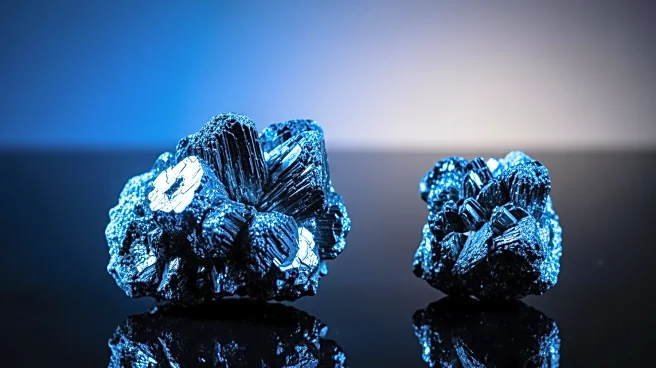
oxides to the Pentagon. This agreement is valued at approximately $96 million and includes a minimum price of $110 per kilogram for neodymium-praseodymium oxide, a critical component in high-performance magnets used in electric vehicles and advanced electronics. The deal aims to reduce U.S. reliance on China, which currently dominates the global rare-earth market. Lynas, recognized as the largest rare-earth producer outside China, operates a major mining operation in Western Australia and a refining facility in Malaysia. The company is also expanding its presence in the U.S. to support domestic manufacturing and defense industries.
Why It's Important?
The agreement between Lynas and the Pentagon is crucial for the U.S. as it seeks to secure a stable supply of rare-earth materials, which are vital for national security and modern technology. Rare earths are used in various applications, including electric vehicles, wind turbines, and military systems. The U.S. government views these materials as a national security priority, given their strategic importance in advanced military technologies. By partnering with Lynas, the U.S. aims to diversify its supply sources and reduce dependence on China, which controls a significant portion of the global rare-earth processing capacity. This move is part of a broader strategy to develop a resilient critical minerals ecosystem and ensure the stability of supply chains for defense and clean energy industries.
What's Next?
If finalized, the Lynas-Pentagon agreement could reshape how critical minerals are sourced for defense, clean energy, and high-tech manufacturing in the coming years. The deal may also encourage investment in rare-earth mining and processing projects across allied countries, as stable pricing mechanisms like the $110 per kilogram price floor for NdPr oxide can help stabilize the market. This stability is essential for encouraging investment in mining and refining projects, which are crucial for building a complete supply chain from raw minerals to finished products. Additionally, the partnership may lead to further collaborations between the U.S. and its allies, such as Australia and Japan, to strengthen mineral security and reduce reliance on Chinese suppliers.
Beyond the Headlines
The Lynas-Pentagon deal highlights the geopolitical dimensions of the rare-earth market. China's dominance in rare-earth production has given it significant influence over global technology supply chains, leading to vulnerabilities for countries reliant on these materials. The U.S. and its allies are pursuing policies to diversify supply sources and create a more balanced global supply network. This includes developing new mines outside China, supporting processing facilities in allied countries, and funding critical mineral research. The agreement also underscores the growing importance of strategic partnerships in securing key industrial resources and ensuring the stability of supply chains for emerging technologies.