
What's Happening?
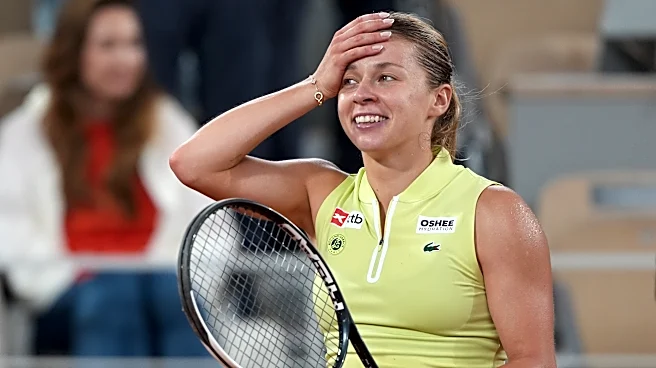
Maja Chwalinska of Poland has made history by becoming the second qualifier in the Open Era to reach a Grand Slam singles final, following her victory over Diana Shnaider of Russia at the French Open.
Chwalinska's achievement is reminiscent of Emma Raducanu's 2021 U.S. Open triumph, where Raducanu also advanced from the qualifying rounds to win the title. Chwalinska, 24, secured her place in the final with a 7-6 (4), 6-4 win, and will face Russian teenager Mirra Andreeva. This marks Chwalinska's first Grand Slam final appearance, having previously only reached the second round at Wimbledon in 2022. Her journey through the tournament has been remarkable, dropping only one set in nine matches, including the qualifying rounds.
Why It's Important?
Chwalinska's run to the final is significant as it highlights the potential for qualifiers to make deep runs in major tournaments, challenging the traditional dominance of higher-ranked players. Her success could inspire other lower-ranked players to believe in their ability to compete at the highest levels. Additionally, her performance will have a substantial impact on her career, with her ranking projected to rise significantly, and her earnings from the tournament providing a financial boost. The final against Andreeva also carries geopolitical undertones, given the ongoing tensions between Russia and Ukraine, which have been a backdrop to the tournament.
What's Next?
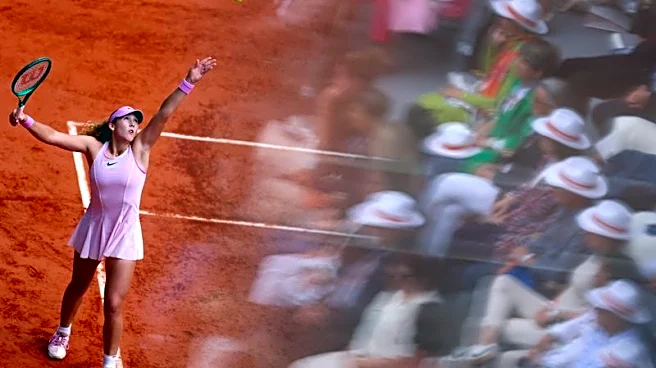
Chwalinska will face Mirra Andreeva in the final, where a victory would not only secure her first Grand Slam title but also elevate her to a new level of recognition in the tennis world. The match is expected to draw significant attention, both for its sporting implications and the broader political context. The outcome could influence future tournament seedings and sponsorship opportunities for Chwalinska.
Beyond the Headlines
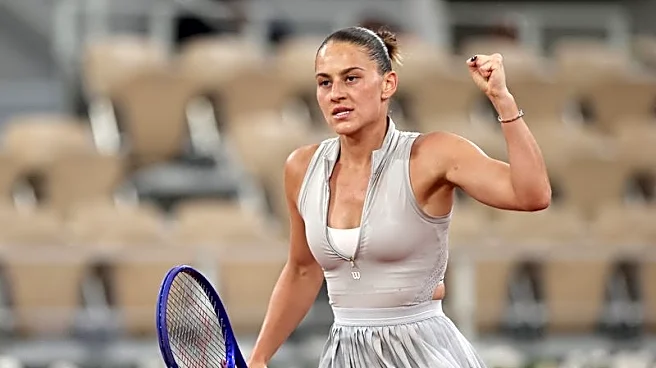
The absence of a handshake between Andreeva and her Ukrainian opponent, Marta Kostyuk, highlights the ongoing tensions related to Russia's invasion of Ukraine. This incident underscores the intersection of sports and politics, where athletes are often seen as representatives of their countries' political stances. The situation raises questions about the role of sports in diplomacy and the responsibilities of athletes in politically charged environments.