






What's Happening?
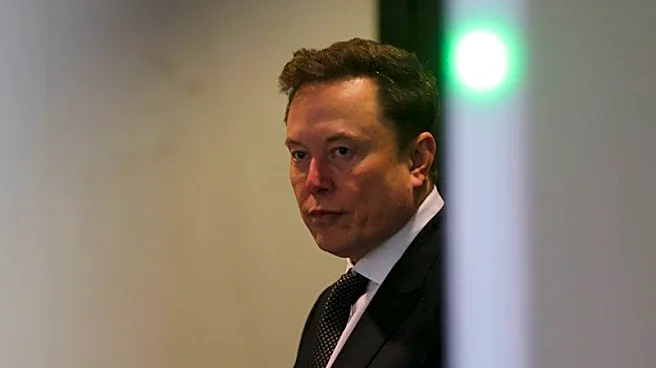
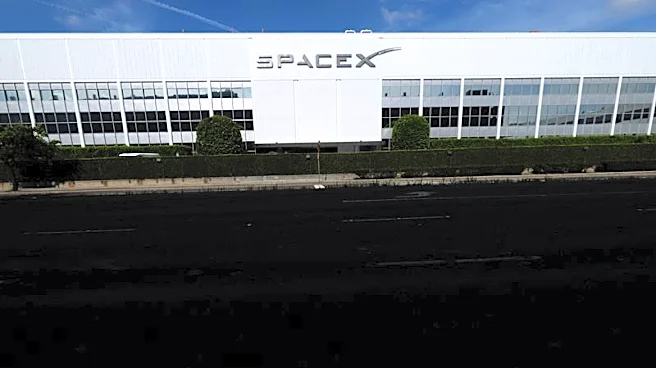
Elon Musk, known for his commitment to clean energy through Tesla, appears to be shifting his focus from traditional solar energy on Earth to space-based solutions. Recent IPO documents from SpaceX reveal that Musk's new company, xAI, is utilizing unregulated
natural gas turbines to power its data centers instead of relying on Tesla's solar panels. Despite spending $697 million on Tesla Megapack battery systems over the past two years, xAI has not significantly invested in solar panels. SpaceX documents highlight a vision for space-based solar arrays, which could generate five times more energy than Earth-based systems due to constant sunlight exposure. This shift aligns with Musk's 'first principles' thinking, aiming to place servers in space to meet the growing demand for AI computing power.
Why It's Important?
This development marks a significant pivot in Musk's energy strategy, potentially impacting the future of solar energy and data center operations. By focusing on space-based solar arrays, Musk is addressing the limitations of Earth-based energy solutions, such as resistance to AI centers and the finite capacity of terrestrial power systems. This move could revolutionize how data centers are powered, offering a sustainable solution to the increasing demand for computing power. However, the economic and technical challenges, including high energy costs for space operations and the need to protect equipment from space radiation, present significant hurdles. The success of this strategy could influence global energy policies and the tech industry's approach to sustainable energy.
What's Next?
As Musk continues to develop this space-based energy strategy, stakeholders in the tech and energy sectors will likely monitor its progress closely. The potential for space-based solar arrays to provide a reliable and abundant energy source could lead to increased investment in space technology and infrastructure. Additionally, regulatory bodies may need to address the implications of using unregulated natural gas turbines and the environmental impact of space-based operations. The success of this initiative could prompt other tech companies to explore similar solutions, potentially reshaping the landscape of energy consumption and data center management.
Beyond the Headlines
The shift towards space-based solar energy raises ethical and environmental questions about the sustainability of space operations and the long-term impact on Earth's energy resources. As Musk's vision unfolds, it may challenge existing energy paradigms and prompt discussions about the balance between technological advancement and environmental stewardship. The potential for space-based solutions to alleviate Earth's energy constraints could drive innovation in other sectors, such as telecommunications and transportation, further integrating space technology into everyday life.