







What's Happening?
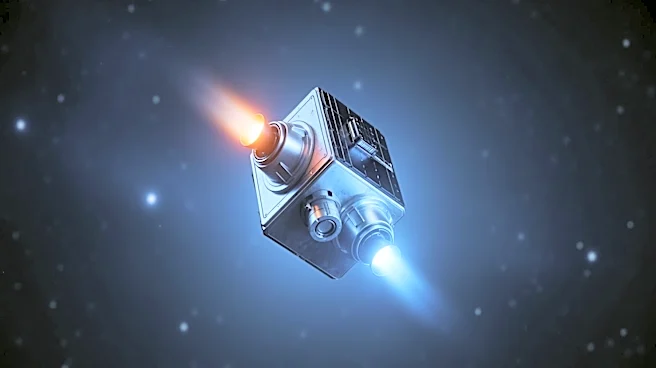
MIT engineers have developed a new spacecraft propulsion system that combines chemical and electric thrusters, offering greater flexibility for small satellites. This dual-mode system uses a single propellant, ASCENT, which supports both rapid and precise
maneuvers. The technology is set to be tested in NASA's upcoming Green Propulsion Dual Mode mission, which will launch a CubeSat equipped with both types of thrusters. This innovation could enable small satellites to undertake more complex missions, such as interplanetary travel and detailed Earth observations, by allowing them to switch between fast and slow propulsion as needed.
Why It's Important?
The development of a dual-mode propulsion system represents a significant advancement in satellite technology, potentially reducing costs and increasing the capabilities of small satellites. By using a single propellant for both chemical and electric propulsion, the system simplifies spacecraft design and reduces weight. This could lead to more efficient and versatile space missions, expanding the potential for scientific research and commercial applications. The technology also aligns with the growing demand for cost-effective and sustainable space exploration solutions, supporting the broader goals of the space industry.