




What's Happening?
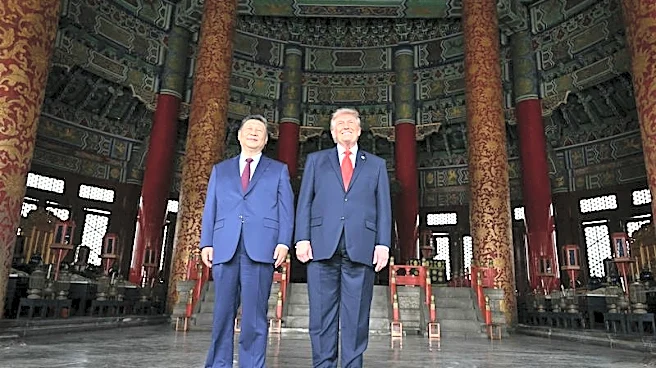
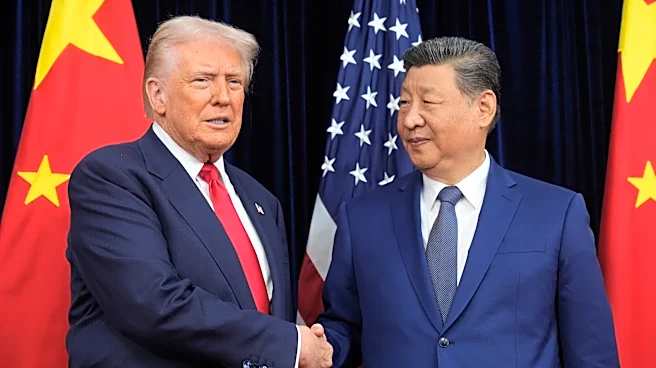
A recent summit between President Trump and Chinese leader Xi Jinping concluded without significant agreements on semiconductor deals, leading to a decline in global semiconductor stocks. The summit, which had raised expectations for breakthroughs in Nvidia's
sales to China, ended without such outcomes. Despite Washington authorizing Nvidia to export its H200 chips to China, Beijing has not formally approved these shipments. This lack of progress resulted in Nvidia shares falling by over 4%, with other semiconductor companies like Intel and Advanced Micro Devices also experiencing declines. The summit's outcome reflects ongoing tensions and strategic moves by both nations, with the U.S. implementing export controls to limit China's access to advanced semiconductors, while China seeks to develop its domestic semiconductor capabilities.
Why It's Important?
The summit's outcome is significant as it highlights the ongoing geopolitical tensions between the U.S. and China, particularly in the technology sector. The lack of major deals affects the semiconductor industry, which is crucial for technological advancements in AI and 5G. The decline in semiconductor stocks indicates investor concerns about the future of U.S.-China tech relations. The U.S. export controls aim to prevent China from gaining access to advanced technologies that could enhance its military capabilities, while China’s push for self-reliance in semiconductors could reshape global supply chains. This situation underscores the strategic importance of semiconductors in global economic and security contexts.
What's Next?
The semiconductor industry may face continued volatility as the U.S. and China navigate their complex trade and technology relationship. Companies like Nvidia may need to explore alternative markets or strategies to mitigate the impact of restricted access to the Chinese market. Additionally, the U.S. may continue to enforce or expand export controls, influencing global semiconductor supply chains. China's efforts to boost its domestic semiconductor industry could lead to increased competition and innovation in the sector. Stakeholders in the tech industry will likely monitor these developments closely, as they could have long-term implications for global technology leadership and economic growth.