



What's Happening?
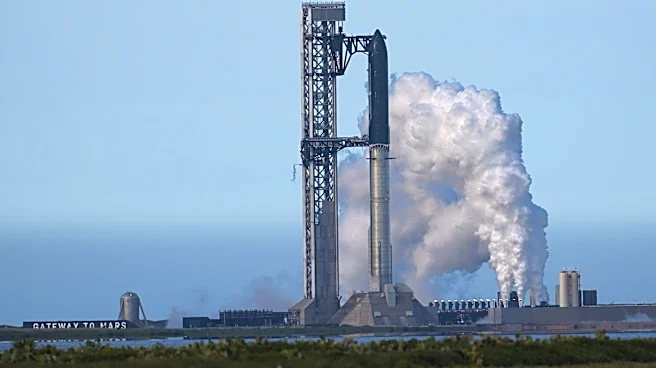
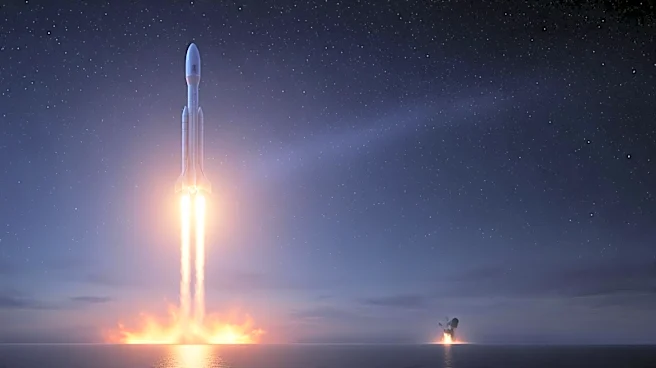
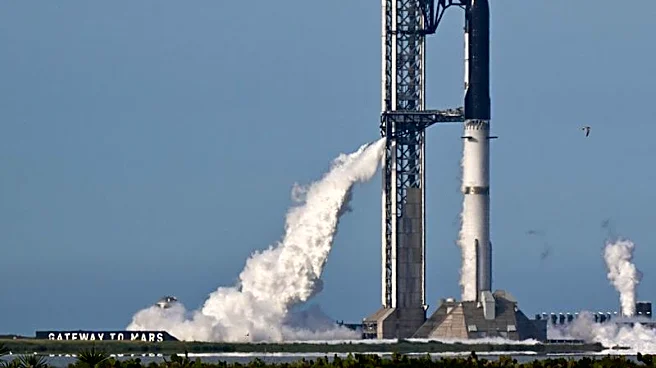
SpaceX launched the third version of its Starship rocket, Starship V3, from its Starbase site in Texas. The launch marked the first real test of the upgraded Starship V3 hardware. The 407-foot-tall rocket, the most powerful spacecraft in history, successfully
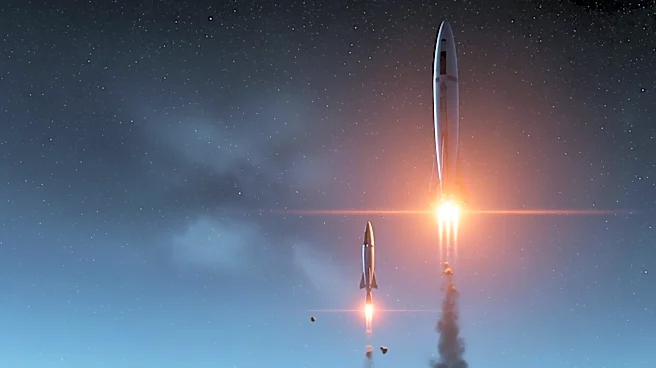
sent its upper stage into space. However, the Super Heavy booster failed to reignite its engines for a return to Earth, resulting in a crash into the Gulf of Mexico. Despite losing one of its six Raptor engines during ascent, the Starship upper stage continued its trajectory toward the Indian Ocean, where it performed a planned splashdown and exploded as expected.
Why It's Important?
This test flight is strategically significant for SpaceX as it represents a major milestone in the development of the Starship V3 hardware. The successful launch and partial mission completion demonstrate the potential of the Starship V3 to support future missions, including NASA's lunar missions and the deployment of next-generation Starlink satellites. The event also coincides with SpaceX's plans to go public, with an IPO expected to raise $75 billion, which will be used to further develop space programs and cover debts related to other ventures.
What's Next?
SpaceX plans to continue testing and refining the Starship V3 hardware. The company is expected to list on the Nasdaq exchange in mid-June, which could provide additional funding for future developments. The Starship project is crucial for SpaceX's mission to make life multi-planetary, with future plans including NASA missions and flights to Mars. The company will likely focus on improving the reliability of the Super Heavy booster to ensure successful recoveries in future launches.