







What's Happening?
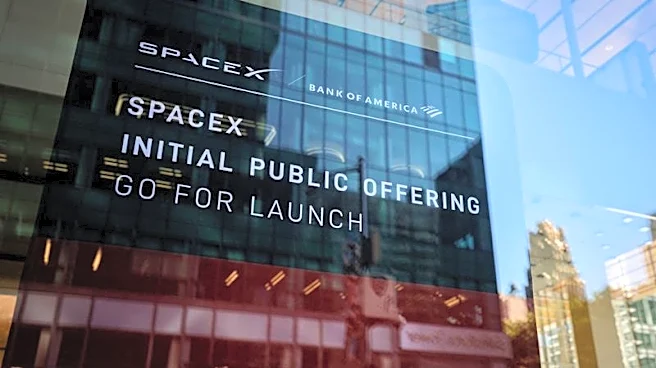
Elon Musk's SpaceX has priced its initial public offering at $135 per share, raising $75 billion and making it one of the world's most valuable companies. The IPO, which is set to debut on the Nasdaq under the ticker SPCX, was four times oversubscribed,
indicating high demand. SpaceX's valuation at $1.77 trillion positions it as the seventh-largest U.S. firm, surpassing companies like Meta and Tesla. The IPO has drawn significant interest from retail investors, with more than $100 billion in purchase orders. Despite the enthusiasm, some market analysts have expressed concerns about SpaceX's financial health, noting its substantial losses and ambitious goals.
Why It's Important?
The SpaceX IPO is a landmark event in the tech and aerospace industries, reflecting the growing interest in space exploration and technology-driven ventures. The massive valuation and investor interest underscore the potential of space-related technologies to transform industries and economies. However, the financial challenges faced by SpaceX highlight the risks associated with high-stakes ventures. The success of the IPO could pave the way for other tech companies to go public, potentially reshaping the market landscape. Additionally, Elon Musk's increasing wealth and influence could have broader implications for the tech industry and beyond.
What's Next?
Following the IPO, SpaceX will need to focus on achieving its ambitious goals, such as establishing a human colony on Mars and developing non-Earth-based data centers. The company's ability to deliver on these promises will be crucial in maintaining investor confidence and supporting its valuation. The IPO may also prompt regulatory scrutiny and discussions about the role of private companies in space exploration. As SpaceX embarks on its public journey, the outcomes of its projects will be closely watched by investors, competitors, and policymakers.