


What's Happening?
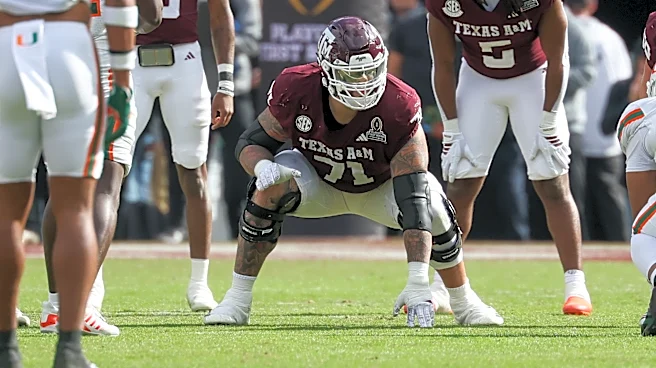
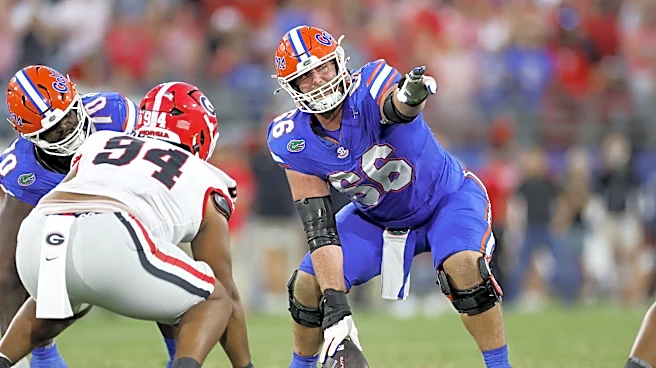
The Los Angeles Chargers have selected Jake Slaughter in the second round of the 2026 NFL Draft, with the 63rd overall pick. Slaughter, a former standout at the University of Florida, is noted for his impressive athleticism, including a 5.1-second 40-yard
dash, a 32.5-inch vertical, and a 110-inch broad jump. Despite his height of 6-foot-5 and weight of 303 pounds, which places him in the 88th and 49th percentiles respectively for his position, there is potential for him to add more bulk. Nick Saban, a prominent figure in college football, has praised Slaughter as his favorite center in the draft. However, with the Chargers having signed Tyler Biadasz in free agency, Slaughter may find himself playing as a guard. The Chargers are optimistic that with good injury luck, their offensive line will be strong across the board.
Why It's Important?
The selection of Jake Slaughter is significant for the Chargers as they aim to bolster their offensive line, a critical component for protecting the quarterback and enhancing the team's offensive capabilities. Slaughter's athleticism and potential versatility in playing both center and guard positions provide the Chargers with valuable options. This move could impact the team's performance in the upcoming season, potentially improving their offensive efficiency. For Slaughter, being drafted by the Chargers offers an opportunity to develop under professional coaching and contribute to a team with playoff aspirations. The decision also reflects the Chargers' strategic approach to building a robust offensive line through both the draft and free agency.
What's Next?
As the Chargers integrate Jake Slaughter into their roster, the focus will be on his development and adaptation to the professional level. Training camps and preseason games will be crucial for Slaughter to prove his capabilities and secure a starting position. The Chargers' coaching staff will likely work on enhancing his physical attributes and technical skills to maximize his impact on the field. Additionally, the team's management will continue to monitor the overall performance of the offensive line, making adjustments as necessary to ensure optimal protection for their quarterback and effectiveness in their offensive strategies.