

What's Happening?
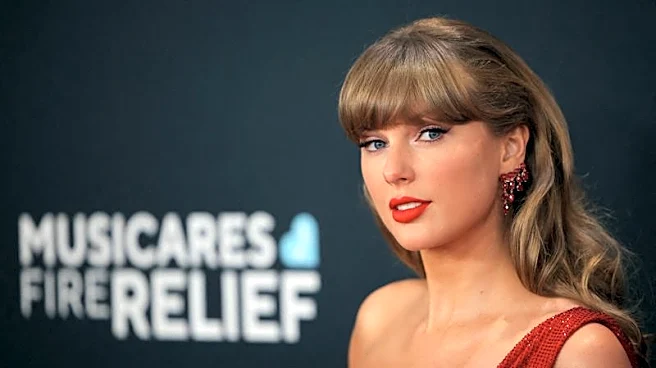
Taylor Swift has taken legal steps to protect her voice and image from unauthorized use by AI technologies. She filed three trademark applications, two for vocal phrases and one for an image, to counter the growing threat of AI-generated content that
mimics her likeness. This move comes as AI deepfakes become more prevalent, with Swift having previously faced AI-created forgeries, including a fake endorsement of President Trump during the 2024 election cycle. Trademark attorney Josh Gerben noted that while music artists typically use copyright to protect their work, trademarks could fill a gap by preventing the creation of content that mimics an artist's voice without using existing recordings.
Why It's Important?
Swift's actions highlight a significant issue in the entertainment industry, where AI technologies can create content that closely resembles the work of artists without their consent. This development could set a precedent for other celebrities seeking to protect their likenesses from AI misuse. The legal framework around trademarks may offer a new avenue for artists to safeguard their identities, potentially leading to more legal battles as AI-generated content becomes more sophisticated. This move could influence public policy and legal standards regarding intellectual property rights in the digital age.
What's Next?
As Swift's trademark applications proceed, the entertainment industry may see an increase in similar filings from other celebrities. This could lead to legal challenges against AI platforms that produce unauthorized content, potentially reshaping how intellectual property laws are applied to AI technologies. Stakeholders, including legal experts and policymakers, may need to address the balance between technological innovation and the protection of individual rights. The outcome of Swift's case could influence future legislation and industry practices regarding AI and intellectual property.