



What's Happening?
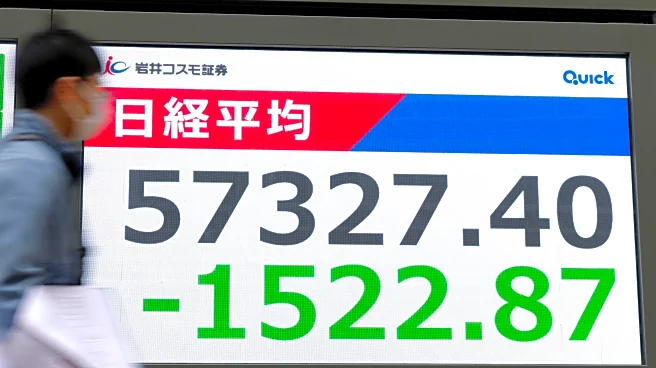
Following U.S. and Israeli strikes on Iran, global markets have reacted with heightened volatility. Energy prices have surged, with U.S. crude oil rising over 8% to $72.57 per barrel, and Brent crude jumping about 9% to $79.41. The Strait of Hormuz, a critical
energy chokepoint, is a focal point as tanker traffic slows due to increased war-risk insurance premiums. Airline stocks have been hit hard, with over 50% of global flights to the Middle East canceled. Major Asian airlines, including Qantas and Japan Airlines, have seen significant stock declines. Meanwhile, gold has risen as a safe haven, and defense stocks have posted modest gains.
Why It's Important?
The conflict in the Middle East is causing significant disruptions in global markets, particularly affecting the energy and airline sectors. The surge in oil prices could lead to higher inflation and increased costs for consumers and businesses. The slowdown in airline operations highlights the broader impact on global travel and logistics. Investors are turning to safe-haven assets like gold, reflecting concerns over geopolitical instability. The situation underscores the vulnerability of global markets to regional conflicts and the potential for widespread economic consequences.
What's Next?
As tensions persist, markets are likely to remain volatile, with continued focus on the Strait of Hormuz and its impact on oil supply. The potential for further escalation could lead to additional disruptions in energy and travel sectors. Investors may continue to seek safe-haven assets, while equities could face further pressure. The response from international stakeholders, including governments and financial institutions, will be critical in managing the conflict's economic impact and stabilizing markets.