

What's Happening?
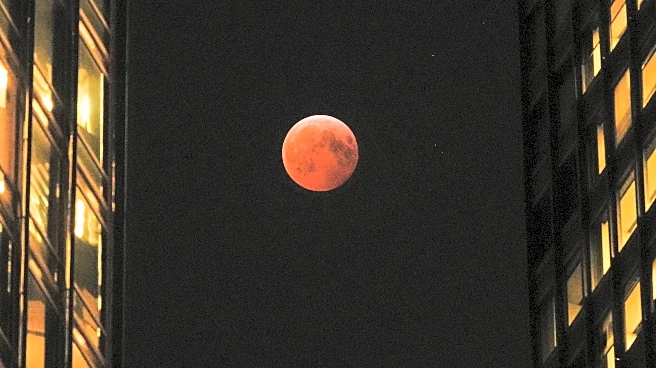
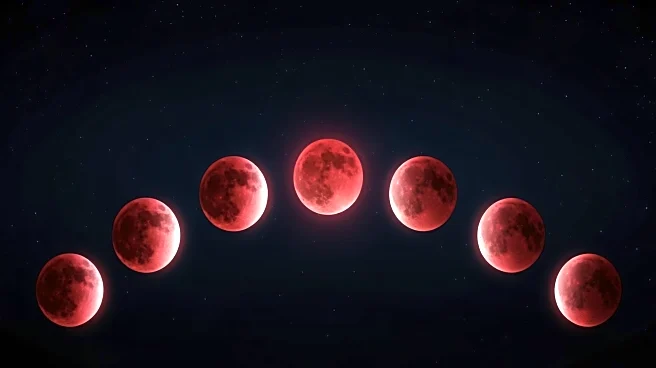
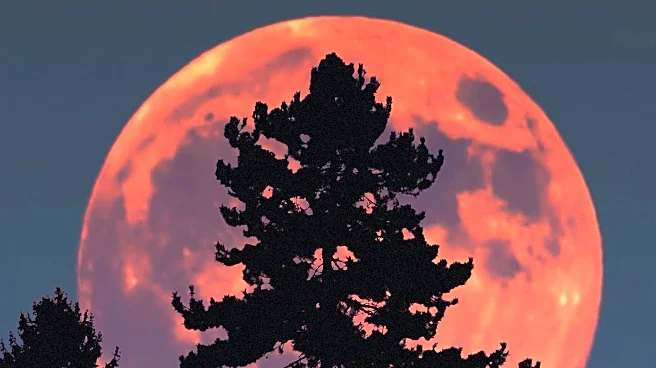
March 2026 is set to be a remarkable month for astrophotographers, particularly in western North America, Australia, New Zealand, and Eastern Asia, due to a total lunar eclipse. This event, occurring on March 3, will be the last total lunar eclipse visible
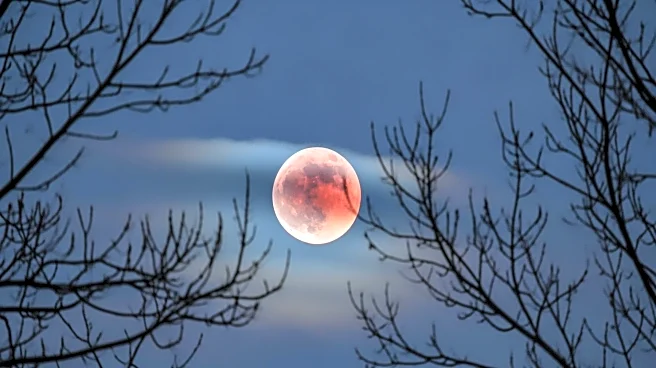
until New Year's Eve 2028. During the eclipse, the moon will take on a copper-reddish hue, a phenomenon caused by the Earth's atmosphere filtering sunlight. This celestial event will be visible across the night side of Earth, although Europe will miss out entirely, and eastern North America will only see partial phases. Additionally, March is a prime time for viewing the Northern Lights, which are expected to be particularly intense. The month also offers opportunities to observe various constellations and deep-sky objects, such as the Orion Nebula and the Crab Nebula, before they disappear from the post-sunset sky until September.
Why It's Important?
The total lunar eclipse and the Northern Lights present significant opportunities for astrophotographers and astronomy enthusiasts. These events not only offer a chance to capture stunning images but also provide educational opportunities for those interested in celestial phenomena. The visibility of such events can boost local tourism in areas where they are best observed, potentially benefiting local economies. Moreover, these occurrences can inspire interest in astronomy and science, encouraging educational institutions to engage students in related activities. The timing of these events, particularly the eclipse, is crucial as it will be the last of its kind for several years, making it a rare opportunity for both amateur and professional photographers.
What's Next?
Astrophotographers and enthusiasts are likely to prepare extensively for these events, utilizing tools such as DSLR or mirrorless cameras with telephoto lenses to capture the eclipse. Planning apps and websites will be essential for aligning shots with foreground features. As the month progresses, additional celestial events, such as the conjunction of Jupiter and the moon, will provide further opportunities for observation and photography. These events may also prompt discussions and gatherings among astronomy clubs and societies, fostering community engagement and shared learning experiences.