



What's Happening?
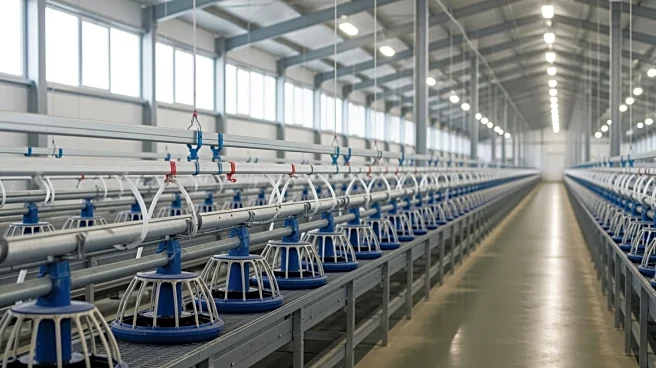
Akola Group, a Baltic agrifood company, is investing €13 million ($15.2 million) to upgrade its poultry operations in Lithuania and Latvia. The investment is part of a larger €43 million ($50.4 million) allocation for the 2025-2026 financial year aimed at modernizing production, expanding incubation capacity, and enhancing biosecurity measures. The company operates Vilniaus Paukštynas and Kaišiadorių Paukštynas in Lithuania, and Kekava Foods in Latvia. The upgrades include the implementation of AI-based carcass preparation technology and the renovation of incubation facilities to ensure a more consistent hatching process, with a capacity to produce up to 45 million day-old chicks. This move comes as a response to the increasing frequency of avian
disease outbreaks in Europe, which necessitates stronger biosecurity measures to protect production processes and maintain supply chain continuity.
Why It's Important?
The investment by Akola Group is significant as it addresses the growing demand for poultry products while simultaneously enhancing biosecurity measures in response to avian disease outbreaks. This is crucial for maintaining the stability and efficiency of the poultry supply chain, which is vital for food security. The use of AI technology in production processes represents a shift towards more advanced and efficient agricultural practices, potentially setting a precedent for other companies in the industry. The expansion of incubation capacity also indicates a strategic move to increase production capabilities, which could lead to greater market share and competitiveness in the European poultry market.
What's Next?
As Akola Group implements these upgrades, the company is likely to monitor the impact on production efficiency and biosecurity closely. The success of these initiatives could lead to further investments in technology and infrastructure, not only within Akola but also across the industry as other companies may follow suit. Additionally, the enhanced biosecurity measures could serve as a model for other regions facing similar challenges with avian diseases. Stakeholders, including investors and industry partners, will be watching closely to see how these changes affect Akola's market position and financial performance.