






What's Happening?
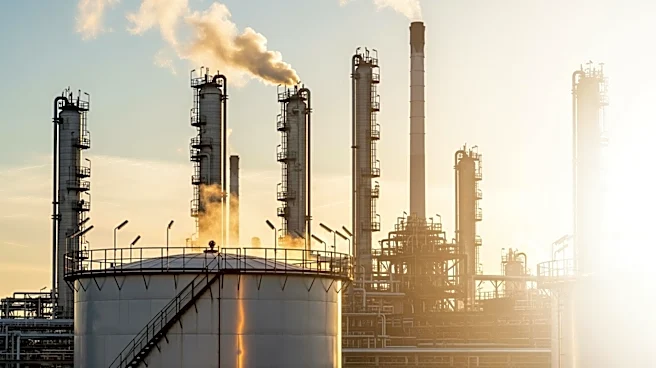
Angola's Cabinda refinery, the first major refining project in the country since its independence, has commenced operations. The refinery, developed at a cost of over $470 million, is now supplying diesel to the local market and exporting heavy fuel oil
and naphtha internationally. Owned 90% by Gemcorp Capital LLP, the facility aims to enhance Angola's energy security. With a current capacity of 30,000 barrels per day, the refinery meets about 10% of Angola's domestic fuel demand. Plans are underway to double this capacity to 60,000 barrels per day in a second phase, which is expected to cost approximately $700 million. This development is part of a broader effort to reduce Africa's dependency on imported refined petroleum products, which currently costs the continent an estimated $50 billion annually.
Why It's Important?
The operation of the Cabinda refinery is a significant step towards reducing Angola's reliance on imported fuel, which currently accounts for about 72% of its needs. By increasing local refining capacity, Angola can retain more value within its economy and reduce the financial outflow associated with fuel imports. This move is also part of a larger trend across Africa to develop local refining capabilities, as seen with projects like Nigeria's Dangote Petroleum Refinery. Such initiatives are crucial for addressing the continent's structural imbalance in the oil sector, where a large portion of crude oil is exported while refined products are imported. The success of these projects could lead to greater energy independence and economic stability for African nations.
What's Next?
The next phase for the Cabinda refinery involves doubling its capacity and adding a hydrocracking unit to produce diesel and jet fuel. This expansion is expected to further strengthen Angola's position in regional fuel supply chains. Additionally, Angola's state oil company, Sonangol, is developing other refining projects, including facilities in Lobito and Soyo. These developments are part of a strategic push to enhance local refining capabilities and reduce import dependence. As these projects progress, they will likely attract more investment and potentially lead to further economic growth and job creation in the region.