


What's Happening?
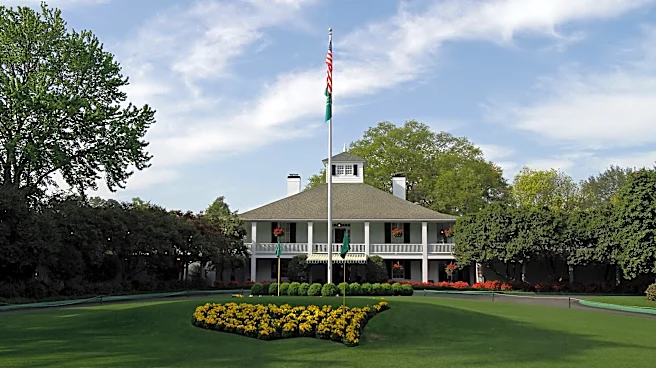
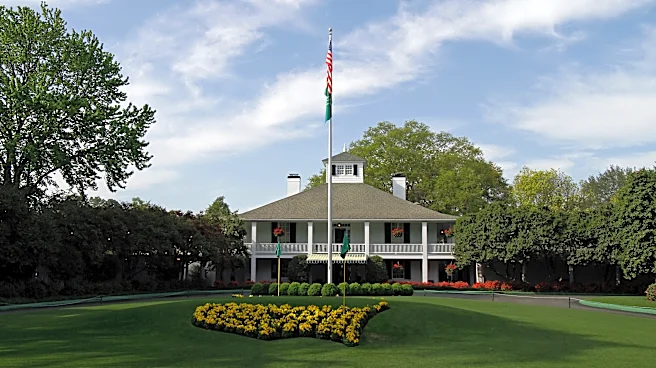
The seventh hole at Augusta National, known as 'Pampas,' has undergone significant changes over the years, making it a more challenging part of the Masters Tournament. Originally designed by Alister MacKenzie to resemble the 'Valley of Sin' at St. Andrews,
the hole was initially 340 yards with no bunkers. However, after Byron Nelson drove the green in 1937, changes were made to elevate the green and add bunkers, making it more difficult. Further modifications included moving the tees back, extending the hole to 450 yards. These changes have transformed the hole from a straightforward par-4 to one that requires precision and strategy, as noted by players like Scottie Scheffler and Xander Schauffele.
Why It's Important?
The transformation of the seventh hole at Augusta National reflects broader trends in golf course design, where increasing difficulty is often introduced to challenge modern players' skills. This change impacts the Masters Tournament by altering how players approach the course, potentially affecting scoring and strategy. For players, mastering this hole can be crucial for maintaining momentum during the tournament. The modifications also highlight the ongoing evolution of golf courses to keep pace with advancements in player abilities and equipment, ensuring that historic courses like Augusta remain competitive and relevant.
What's Next?
As the Masters continues, players will need to adapt their strategies to navigate the more challenging seventh hole effectively. This may involve focusing on precision driving and strategic shot placement to avoid the hazards introduced by the course's redesign. The ongoing evolution of the course could lead to further changes in the future, as Augusta National seeks to maintain its status as a premier golfing venue. Players and coaches will likely continue to analyze the course's challenges to optimize performance in future tournaments.