

What's Happening?
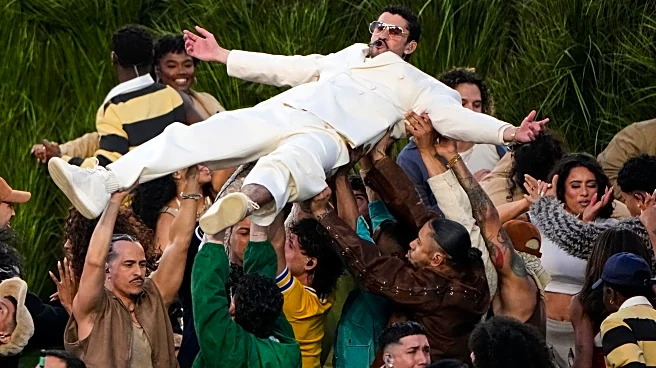
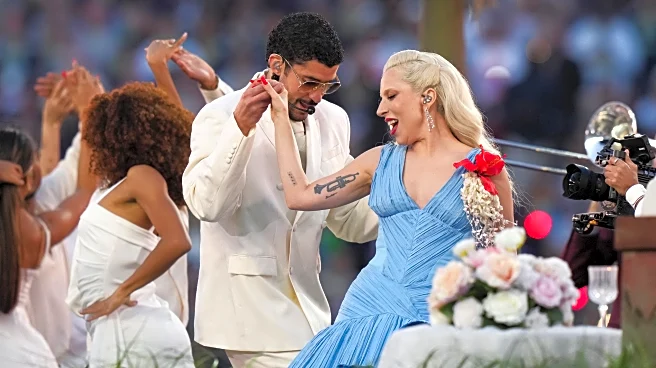
The NFL has announced that international music star Bad Bunny will headline the Super Bowl 60 halftime show. This decision, made public in late September 2025, has sparked controversy due to Bad Bunny's primary use of Spanish in his music. President Trump has criticized the choice, stating he is 'anti-Bad Bunny and Green Day' and will not attend the Super Bowl. Bad Bunny, a Puerto Rican artist, has been a significant figure in the music industry since 2013, earning 16 Grammy nominations and three wins. His selection as the halftime performer is seen as a nod to his widespread popularity, being the second-most streamed artist on Spotify. Bad Bunny expressed that his performance is a tribute to his culture and history, aiming to bring unity and joy
to the audience.
Why It's Important?
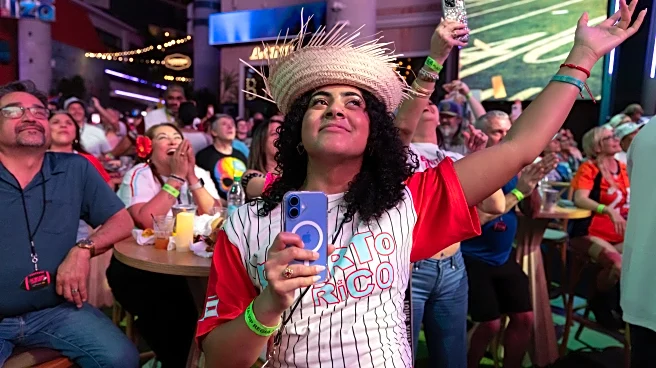
The selection of Bad Bunny as the Super Bowl halftime performer highlights the NFL's attempt to diversify and appeal to a broader audience. This move could potentially increase viewership among Spanish-speaking and international audiences, reflecting the growing influence of Latin music in the U.S. market. However, the decision has also drawn criticism, particularly from political figures like President Trump, indicating a cultural divide in the reception of non-English performances at major American events. The controversy underscores ongoing discussions about representation and inclusivity in entertainment, especially in high-profile platforms like the Super Bowl.
What's Next?
As the Super Bowl approaches, reactions from various stakeholders, including fans, sponsors, and cultural commentators, will likely intensify. The NFL may face pressure to address the criticisms and justify their choice of performers. Additionally, Bad Bunny's performance could set a precedent for future halftime shows, potentially influencing the selection of artists who represent diverse cultural backgrounds. The event will also test the NFL's ability to balance traditional expectations with modern, inclusive programming.
Beyond the Headlines
The controversy surrounding Bad Bunny's selection raises questions about the role of cultural representation in mainstream American events. It highlights the tension between traditional American entertainment norms and the evolving demographic landscape of the country. This situation could lead to broader discussions about the inclusion of diverse voices in national platforms and the impact of cultural diversity on American identity. The outcome of this event may influence future decisions in the entertainment industry regarding representation and inclusivity.