


What's Happening?
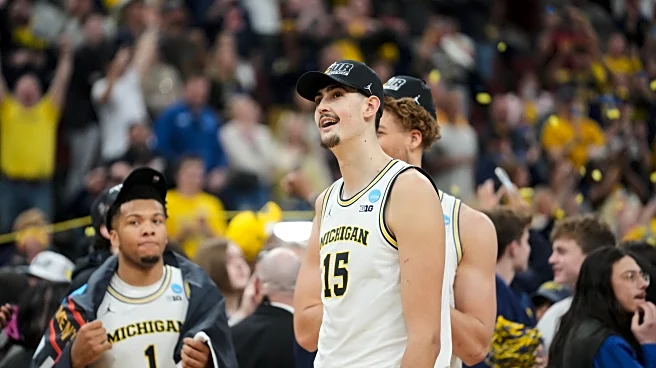
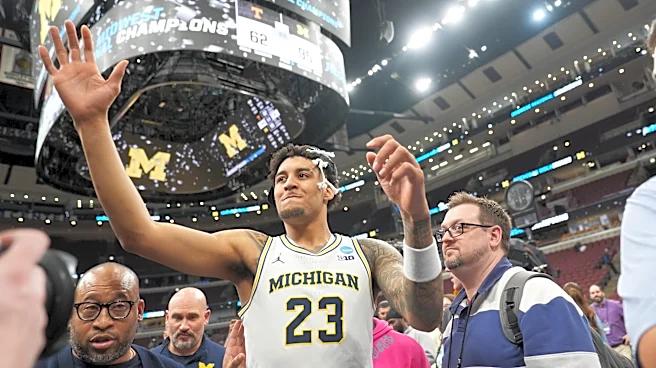
Dusty May, head coach of the University of Michigan's basketball team, has successfully transformed the program, leading the Wolverines to the Final Four. This turnaround comes after a challenging period under former coach Juwan Howard, where the team finished
last in the Big Ten. May's strategy has heavily relied on the transfer portal, with none of the current starters beginning their careers at Michigan. The team has achieved a 35-3 record this season, winning the Big Ten regular season title and securing a spot in the Final Four against Arizona. May's approach to recruiting has evolved, focusing on building a strong team identity and brand, which has made recruiting more efficient.
Why It's Important?
Dusty May's success at Michigan highlights the changing landscape of college basketball, where the transfer portal and NIL deals are reshaping team dynamics. His ability to quickly turn around a struggling program demonstrates the potential for other teams to adopt similar strategies. This shift could lead to more competitive balance in college basketball, as teams can rebuild faster by attracting top talent through the transfer portal. May's approach also challenges traditional recruiting methods, emphasizing the importance of team identity and player choice in the recruitment process.
What's Next?
Michigan's upcoming matchup against Arizona in the Final Four will test the effectiveness of May's strategies on a national stage. A victory could further solidify Michigan's reputation as a top program and attract more high-caliber players. As the transfer portal continues to play a significant role in college basketball, May will need to maintain his aggressive approach to recruiting to replace key players who may leave for the NBA or graduate. The outcome of the Final Four could influence future recruiting decisions and the team's long-term success.
Beyond the Headlines
Dusty May's approach to recruiting and team building reflects broader changes in college sports, where player empowerment and strategic use of the transfer portal are becoming more prevalent. This shift raises questions about the sustainability of traditional college basketball programs and the potential for increased player mobility. May's success could inspire other coaches to adopt similar strategies, leading to a more dynamic and competitive environment in college basketball.