
What's Happening?
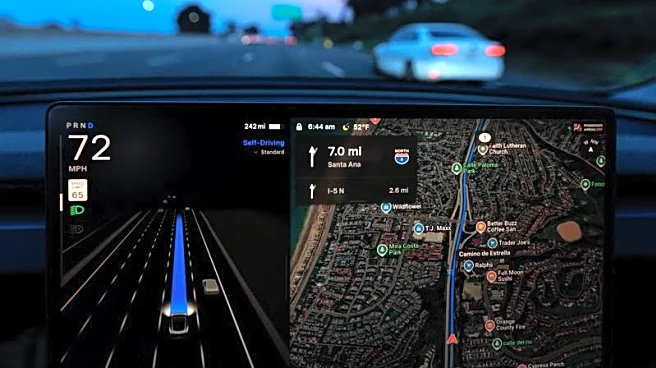
The National Highway Traffic Safety Administration (NHTSA) has intensified its investigation into Tesla's Full Self-Driving (FSD) system, focusing on its performance in poor visibility conditions. This escalation involves approximately 3.2 million Tesla vehicles
equipped with FSD, transitioning from a preliminary evaluation initiated in October 2024 to a more advanced engineering analysis. This step often precedes a potential recall. Central to the investigation are concerns that Tesla's camera-based system may not adequately detect or respond to environmental factors such as glare, dust, or airborne obstructions. The NHTSA has identified nine crashes potentially linked to these issues, including one fatality and two injuries, and is reviewing six additional crashes. The agency is also scrutinizing Tesla's shift from radar to a camera-only system, known as Tesla Vision, implemented in mid-2021. The effectiveness of Tesla's degradation-detection system, designed to monitor sensor performance, is also under review.
Why It's Important?
This investigation is significant as it adds to the regulatory pressure on Tesla's advanced driver-assistance systems, including Autopilot and FSD, which are crucial to the company's long-term strategy and its plans for a robotaxi service. The outcome of this probe could have substantial implications for Tesla's operations and its reputation in the automotive industry. If the NHTSA finds that the FSD system is flawed, it could lead to a recall, affecting millions of vehicles and potentially resulting in financial and reputational damage to Tesla. Moreover, this investigation highlights the broader challenges and safety concerns associated with the deployment of autonomous driving technologies, which are under increasing scrutiny from regulators and the public.
What's Next?
The NHTSA will continue to evaluate whether software updates to Tesla's detection system improve its performance and whether earlier versions of the system contributed to the crashes under review. Depending on the findings, the agency may take further regulatory actions, which could include mandating a recall. Tesla may need to address these concerns through additional software updates or hardware modifications. The outcome of this investigation could influence regulatory approaches to autonomous vehicle technologies and impact the development and deployment of similar systems by other manufacturers.