




What's Happening?
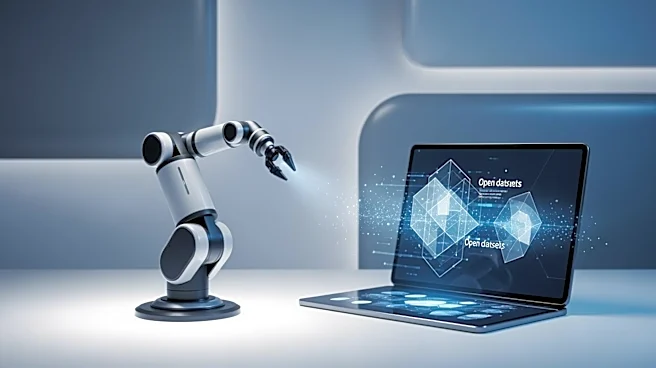
X Square Robot has introduced XRZero-G0, an open-source hardware-software framework aimed at improving robotics research by reducing the need for real-robot training data. The XRZero-G0 system, accompanied by the G0-Dataset, a 2,000-hour multimodal repository,
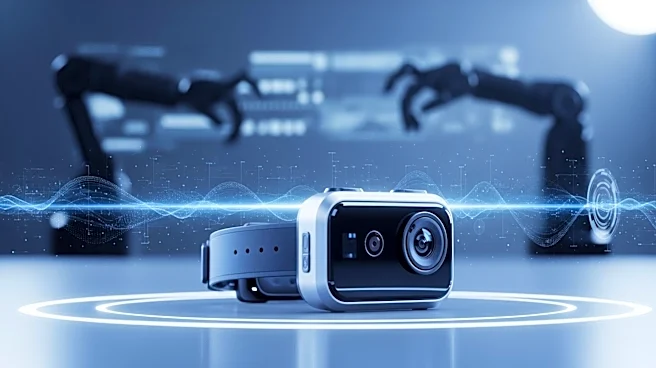
is designed to bridge the gap between human and machine perception. This framework allows for standardized robot-free data collection, enabling human-demonstrated tasks to be reliably checked and transferred to new robotic platforms. The system features a virtual reality interface with multi-view cameras and dual grippers, supporting precise pose estimation and data synchronization. X Square Robot claims that this approach can achieve performance comparable to real-robot datasets with fewer real-robot episodes.
Why It's Important?
The introduction of XRZero-G0 is significant for the robotics industry as it addresses the critical barrier of data quality in robot-free learning. By providing a comprehensive framework for data collection and policy transfer, X Square Robot is facilitating the development of general-purpose robots and scalable embodied AI. This open-source initiative is expected to accelerate research and innovation in robotics by offering high-quality datasets and methodologies to the research community. The potential to reduce reliance on real-robot data could lower costs and increase accessibility for researchers, fostering advancements in robotics technology.
What's Next?
X Square Robot plans to continue validating the XRZero-G0 system through controlled experiments, demonstrating its effectiveness in various tasks. The open-sourcing of the G0-Dataset and the framework is expected to encourage further research and collaboration within the robotics community. Researchers and developers are likely to explore new applications and improvements in robotic manipulation and AI, leveraging the resources provided by X Square Robot. The ongoing development and adoption of such frameworks could lead to more sophisticated and capable robotic systems in the future.