





What's Happening?
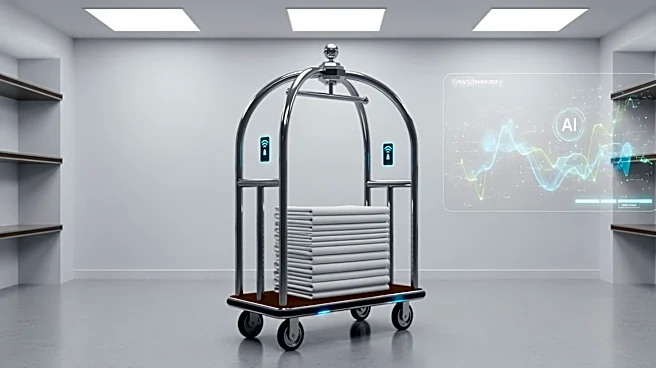
Hotels are increasingly adopting RFID (Radio Frequency Identification) technology and AI-powered software to transform their linen inventory management. Traditionally, hotels have relied on manual counts and educated guesses to manage linen, leading to overstocking,
significant losses, and inefficient use of staff time. By integrating RFID tags into linens, hotels can track inventory with high accuracy, reducing loss rates from 15-20% to 3-5%. RFID tags, which can withstand over 200 industrial wash cycles, provide real-time data on linen location and movement, allowing hotels to maintain optimal inventory levels and reduce capital tied up in excess stock. AI further enhances this system by analyzing data to predict future linen needs, optimize purchasing, and identify loss patterns, thus enabling hotels to operate more efficiently and sustainably.
Why It's Important?
The adoption of RFID and AI in linen management is significant for the hospitality industry as it addresses one of its largest operational expenses. By reducing the need for excess inventory and minimizing losses, hotels can significantly cut costs, freeing up capital for other investments. This technology also improves operational efficiency by reducing the time staff spend on inventory management, allowing them to focus more on guest services. Additionally, the data-driven insights provided by AI help hotels make informed decisions, enhancing vendor accountability and improving service quality. This technological shift not only boosts profitability but also supports sustainability efforts by extending the lifespan of linens and reducing waste.
What's Next?
As more hotels adopt RFID and AI technologies, the industry can expect a shift towards more data-driven operations. Hotels that implement these systems will likely gain a competitive edge by offering better service and reducing operational costs. The technology also opens up opportunities for enhanced collaboration with commercial laundries, as shared data can improve transparency and service quality. As the technology matures, it may expand to other areas of hotel operations, further driving efficiency and innovation in the hospitality sector.