



What's Happening?
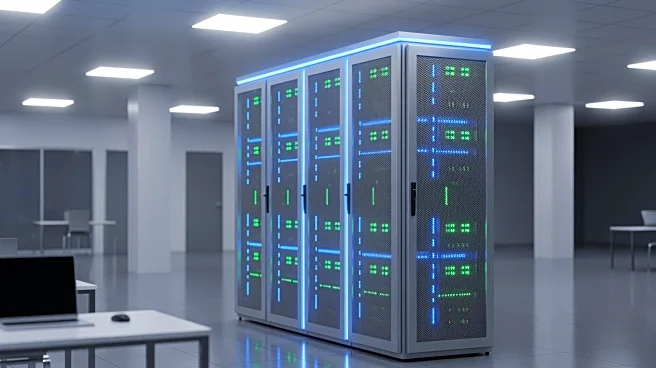
Wisconsin is experiencing a surge in data center developments, which is sparking debates about their economic impact on local communities. Data centers, which are large facilities housing computer systems and associated components, are being constructed
across the state, promising job creation and economic growth. The construction phase of these centers requires a significant workforce, including electricians, plumbers, and construction workers. However, once operational, the number of permanent jobs decreases significantly, with data centers typically employing around 50 full-time workers. Experts from the University of Wisconsin-Milwaukee and the University of Michigan highlight that while the initial construction phase creates numerous jobs, the long-term economic benefits are uncertain. The data center industry also has the potential to boost local manufacturing and infrastructure development, as these facilities require extensive utility and technological support.
Why It's Important?
The development of data centers in Wisconsin represents a significant shift in the state's economic landscape. These centers are part of a broader trend of digital infrastructure expansion, driven by increasing demand for data processing and storage. The construction and operation of data centers can stimulate local economies by creating jobs and increasing demand for local services and products. However, the sustainability of these economic benefits is a concern, as the majority of jobs are temporary and related to the construction phase. Additionally, the environmental impact of data centers, including their substantial energy and water usage, poses challenges that need to be addressed. The potential for data centers to drive technological and industrial growth in Wisconsin is significant, but it requires careful planning and management to ensure long-term benefits.
What's Next?
As data centers continue to be developed in Wisconsin, stakeholders will need to address several key issues. Policymakers and industry leaders must consider strategies to maximize the long-term economic benefits of these centers, such as investing in workforce training and infrastructure improvements. There is also a need to balance economic growth with environmental sustainability, ensuring that data centers operate efficiently and responsibly. The potential for data centers to drive innovation and technological advancement in Wisconsin is substantial, but it will require collaboration between government, industry, and educational institutions to fully realize these opportunities. Additionally, the integration of renewable energy sources, such as nuclear power, could play a crucial role in supporting the energy demands of data centers while minimizing their environmental impact.