





What's Happening?
The 21st annual International Thriller Writers (ITW) Awards Banquet took place at the New York Hilton Midtown, celebrating achievements in the thriller genre. The event, attended by over 500 people, included panel discussions and programs for aspiring
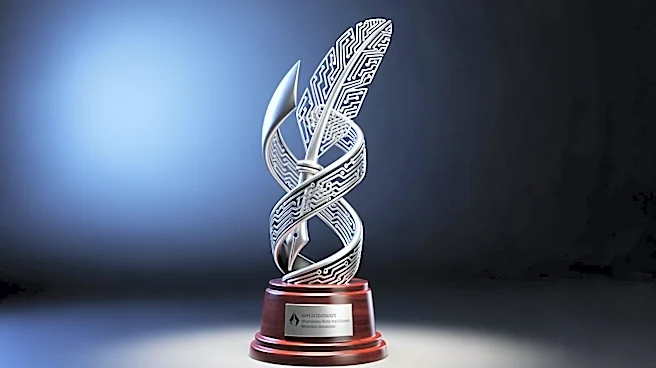
authors. Notable honorees included Lisa Scottoline and Harlan Coben, who were recognized as ThrillerMasters. Douglas Preston received the Silver Bullet Award for his advocacy against AI's unauthorized use of authors' works. Preston criticized major AI developers for exploiting writers' intellectual property, likening it to 'Robin Hood in reverse.' The ceremony also honored Kelsey Cox, Michael Robotham, Diana Rodriguez Wallach, and Megan Collins for their contributions to the genre.
Why It's Important?
The event highlights the ongoing tension between authors and AI developers over intellectual property rights. As AI technology advances, the unauthorized use of creative works poses a significant threat to authors' livelihoods. Douglas Preston's remarks underscore the need for collective action to protect creative rights, emphasizing storytelling as a fundamental human trait. The awards also spotlight the importance of recognizing and supporting genre-specific achievements, which can inspire new talent and sustain the literary community. The discussions and recognitions at the banquet reflect broader industry concerns about the impact of technology on creative professions.
What's Next?
The ongoing legal and ethical debates surrounding AI's use of creative content are likely to continue. Authors and industry leaders may push for stronger legal protections and industry standards to safeguard intellectual property. The ITW and similar organizations could play a pivotal role in advocating for authors' rights and fostering dialogue between creators and technology companies. Future events may focus on developing strategies to balance technological innovation with the preservation of creative integrity.
Beyond the Headlines
The controversy over AI's use of creative works raises broader questions about the future of storytelling and the role of technology in creative industries. As AI becomes more integrated into content creation, there may be shifts in how stories are produced and consumed. This could lead to new forms of collaboration between humans and machines, but also necessitate ethical guidelines to ensure fair compensation and recognition for human creators. The preservation of storytelling as a cultural and evolutionary trait may require rethinking traditional models of authorship and creativity.