
What's Happening?
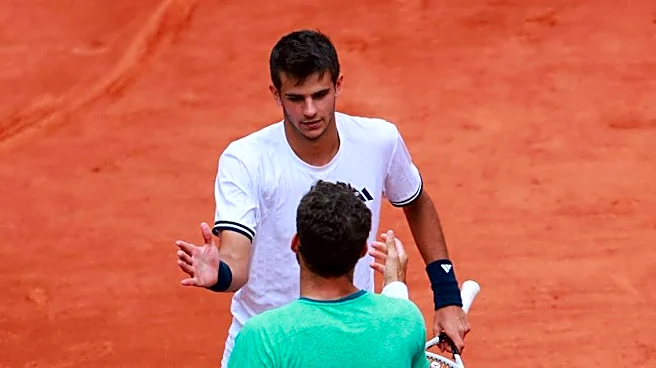
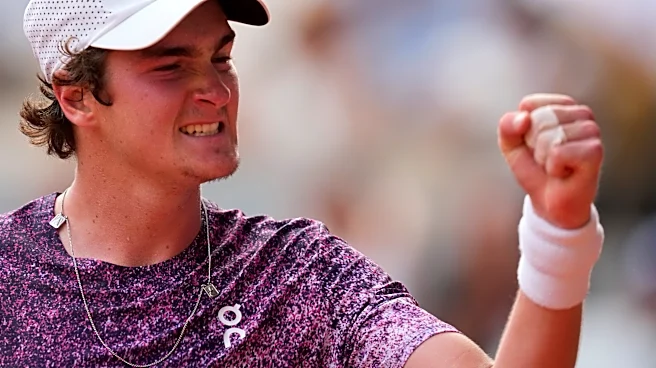
Rafael Jódar, a rising star in men's tennis, is making waves with his aggressive playing style, challenging the traditional Spanish tennis archetype. Recently, Jódar advanced to the quarterfinals of the French Open, showcasing his ability to adapt and
seize opportunities during matches. In a notable fourth-round match, he overcame a two-set deficit against Pablo Carreño Busta, capitalizing on his opponent's injury to secure a five-set victory. Jódar's performance has been marked by his powerful groundstrokes and strategic play, distinguishing him from the classic Spanish 'grinder' style. His success at the French Open follows a series of impressive wins, including his first ATP Tour title in Marrakech and a strong showing at the Madrid Open.
Why It's Important?
Jódar's emergence represents a significant shift in Spanish tennis, moving away from the traditional endurance-based style to a more aggressive, front-foot approach. This evolution could influence the future of Spanish tennis, inspiring younger players to adopt similar strategies. Jódar's success also highlights the potential for new talent to challenge established players on the international stage, potentially reshaping competitive dynamics in men's tennis. His rise may encourage other players to innovate and diversify their playing styles, contributing to the sport's evolution.
What's Next?
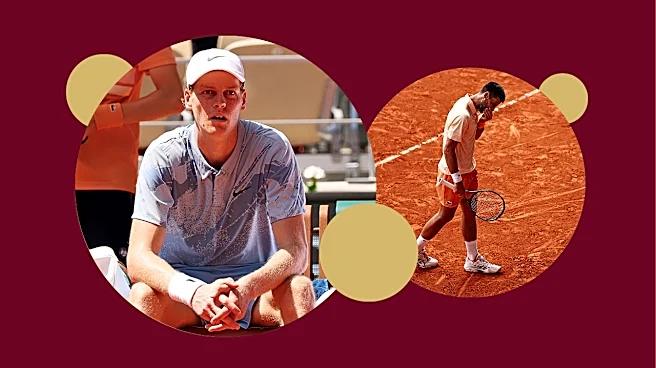
As Jódar continues to compete at high-level tournaments, his performance will be closely watched by tennis enthusiasts and professionals. His upcoming matches, particularly against top-ranked players like Jannik Sinner, will test his ability to maintain his aggressive style under pressure. Success in these matches could further solidify his position as a leading figure in the new wave of Spanish tennis. Additionally, Jódar's progress may influence coaching strategies and player development programs in Spain, promoting a shift towards more dynamic and versatile playing styles.
Beyond the Headlines
Jódar's rise in tennis not only challenges traditional playing styles but also reflects broader cultural shifts within the sport. His approach emphasizes adaptability and innovation, qualities that are increasingly valued in modern tennis. This change may lead to a reevaluation of training methods and player development, encouraging a more holistic approach that balances physical endurance with strategic acumen. Jódar's success could also inspire a new generation of players to pursue tennis careers, contributing to the sport's growth and diversity.